The Hidden Cost of Leadership Misalignment (And How CEOs Miss It)

Most CEOs don’t realize it at first.
Your leadership team seems smart. Everyone’s busy. There’s no major conflict.

But something still feels off.

Execution is slower than it should be.
Decisions stall or get revisited.
Your calendar is full of meetings that don’t seem to move the needle.
And when you dig into problems, you hear different stories from different people  none of them wrong, but none of them aligned.

This is leadership misalignment.
It’s rarely loud. It’s almost never intentional.
But left alone, it becomes one of the biggest hidden costs in growing companies.

How CEOs Miss the Warning Signs

Most CEOs assume misalignment looks like conflict.
Arguing. Tension. Power struggles.

But in mid-market companies, misalignment is quieter. It looks like:

  • Too many meetings with unclear outcomes
  • Leaders solving problems in isolation
  • Strategy that sounds different depending on who explains it
  • Departmental goals that don’t reinforce each other
  • Issues that get discussed, then surface again weeks later

The reason it gets missed is because everyone’s still working hard. The business is still moving forward. But the effort isn’t translating into consistent execution  and the CEO can feel it, even if they can’t name it.

The Real Cost: Execution Drag and Cultural Erosion

Misalignment isn’t just a leadership issue. It creates ripple effects across the company.

Here’s what it costs over time:

1. Execution Drag

When the leadership team isn’t on the same page, decisions slow down. Priorities shift without warning. People waste time debating instead of doing. And no one’s quite sure what’s most important.

Even a 10% drop in clarity at the top can create 30% execution drag in the business.

2. Cultural Erosion

Misalignment at the top breeds confusion below. Teams start second-guessing. Middle managers struggle to defend or explain strategic choices. Accountability slips.
Eventually, high performers get frustrated  not because of the work, but because of the noise around the work.

Why Alignment Gets Harder as You Grow

In smaller companies, alignment happens naturally. Everyone’s in the same meetings. Strategy changes can be shared in a hallway conversation.

But once you cross $10M and especially as you build a true leadership team, that organic alignment disappears.

The leadership team needs intentional structure to stay aligned, or each person starts leading their own version of the business.

This is often the moment when CEOs feel like they’re working harder than ever, but the company feels heavier and less responsive than it used to.

If that’s where you are, this article might hit home:


👉 The CEO’s Real Job Once Your Company Passes $10M

How to Spot (and Fix) Misalignment

The good news: this is solvable. But it takes more than a team retreat or a strategy offsite.
Fixing misalignment starts with a few hard questions:

  • Is your leadership team aligned on the real priorities  or just the calendar?
  • Do your team’s goals reinforce each other or conflict in practice?
  • Are you making decisions with shared context  or based on who’s in the room?
  • Can every person on the team explain the strategy the same way?
  • Are you revisiting the same issues repeatedly without resolution?

Once you’ve asked these questions honestly, the next step is structure:

  • Shared planning rhythms that align execution across departments
  • Crisp ownership and decision rights to reduce backchanneling
  • Clarity on metrics, roles, and expectations, without silos
  • Real conversations on tension, tradeoffs, and team behavior

Frameworks like EOS, Scaling Up or Lencioni’s 5 Dysfunctions can help guide these conversations, but the real work is in the commitment to align at the top and stay aligned over time.

Final Thought

If execution feels slower than it should…
If your team is talented but not operating as one…
If you’re constantly the one reconnecting dots or translating priorities…

It’s worth stepping back and asking:
Where are we misaligned and what’s it costing us?

Leadership misalignment isn’t loud. But the results are.

A short conversation often brings clarity.
Reach out to Newlogiq if you’d like to talk through where your leadership structure might be holding you back.

The CEO’s Real Job Once Your Company Passes $10M

Why designing and developing matters more than doing

There’s a moment in every CEO’s journey when the business gets too big to run the way it used to.
Usually, it’s somewhere around the $10M mark.

You’ve built the company through grit, instinct, and getting involved in everything. But now, things are moving faster. The leadership team is growing. Accountability is getting blurry. And your time is getting pulled in too many directions.

This is when the CEO’s job starts to shift and most don’t see it coming.

The problem isn’t you. It’s that your role hasn’t evolved as fast as the business has.

What Got You Here Won’t Get You There

Most CEOs at this stage are still doing too much themselves. They’re solving day-to-day problems, jumping into meetings that don’t require them, and carrying key relationships that no one else has full context on.

It’s not because they’re controlling. It’s because that’s what built the business in the first place.

But when you cross $10M, hustle turns into friction. The leadership team needs space to lead. Decisions take longer when everything passes through one person. And you start to feel stuck, working harder than ever, with less impact than before.

That’s the signal. The job has changed.

The Real Work Starts to Shift

The shift looks like this:

  1. From Doing to Designing
    You stop being the problem-solver and start being the system designer.
    Your value comes from building the structure that allows others to lead. That means defining roles, decision rights, and communication rhythms,  not just stepping in when things go sideways.
  2. From Designing to Developing Leaders
    Once structure is in place, you start building real leadership depth. That means coaching, accountability, and succession planning. You don’t just delegate tasks,  you develop people who can think, decide, and act without you in the room.
  3. From Rescuing to Releasing
    This might be the hardest part. As the CEO, you’re used to having the answers. But now, your job is to let others own the results, even if they get it wrong before they get it right.

What This Looks Like in Practice

We’ve seen this shift play out in dozens of companies, and the patterns are consistent:

  • The CEO is still the bottleneck for decisions that should live in the team
  • Meetings are crowded with updates instead of forward-looking decisions
  • The org chart looks clean on paper, but in practice, people still escalate everything up
  • Strategy gets stuck because the leadership team doesn’t fully own execution
  • Performance issues go unaddressed because accountability isn’t clear

This isn’t bad leadership. It’s a normal growth ceiling. The way through it isn’t to do more,  it’s to lead differently.

Use Frameworks to Support the Shift

This is where frameworks like EOS, Scaling Up, or Lencioni’s team models come in. They give CEOs and leadership teams language, structure, and systems to support scale.

  • EOS helps clarify roles and meeting rhythms early in the journey
  • Scaling Up goes deeper into team accountability, strategy, and cash
  • Lencioni’s Five Dysfunctions can help surface team dynamics that slow progress

These tools don’t replace leadership, but they do help create the foundation for a CEO to step into a higher-leverage role.

If some of these patterns sound familiar,  like slow decisions, shallow accountability, or friction on the leadership team,  here’s a deeper look at why many companies between $10M and $50M stall, and what to do about it:

Why Most $10–50M Companies Stall at the Same Growth Ceiling

What the CEO’s Role Looks Like Now

Past $10M, the CEO’s real job sounds more like this:

  • Design the structure, not manage the work
  • Develop leaders who take full ownership
  • Protect alignment between vision, team, and execution
  • Drive clarity across the leadership table
  • Model calm, focused leadership in the face of growth pressure

This is the shift from founder energy to CEO focus. And it’s the difference between companies that keep growing and those that stall under their own complexity.

Final Thought

If you’re spending your days in back-to-back meetings, solving problems that others should own, and wondering why it all feels heavier than it should,  it might be time to reframe your role.

This is a pattern we see in nearly every company that crosses the $10M mark.

And like most ceilings, it’s more solvable than it feels.

A short conversation often brings clarity.
Reach out to Newlogiq if you’d like to talk through where you are, where you’re stuck, and what the next chapter of your role might look like.

EOS vs Scaling Up vs Business Made Simple: Which One Fits Your Business?

Choosing a business framework can feel like choosing a playbook before you know the rules of the game.

Business Made Simple. EOS. Scaling Up..

They all offer structure, focus, and momentum. And the truth is, all three can work. But they’re not one-size-fits-all. Each is built for a different kind of company and a different stage of growth.

At Newlogiq, we don’t push a favorite. We don’t believe there’s a “best” system. We focus on outcomes. The right system is the one that helps your leadership team move faster, align better, and lead with more clarity.

Let’s take a look at each and help you decide which one might actually fit your business.

Why Use a Framework at All?

As your company grows, things start to shift. Communication gets harder. People step on each other’s toes. Meetings feel less productive. Decisions get stuck. And you start to realize that what used to work isn’t working anymore.

This is usually when a CEO starts looking for structure. Not because the business is broken, but because it’s getting more complex. And informal systems don’t hold up as you scale.

A good framework helps you bring order to that chaos. The trick is picking the one that actually matches where you are right now.

1. Business Made Simple

Best For: Early-stage or smaller companies that need help with messaging, clarity, and basic leadership systems.

Business Made Simple is simple by design. It’s focused on storytelling, clear communication, and leadership development. It helps founders lead better, clarify their message, and build healthy internal communication.

Why it works:

  • Easy to understand and implement
  • Great for newer leaders or teams without formal structure
  • Strong focus on messaging and leadership clarity

Where it may fall short:

  • Doesn’t offer a full operating system
  • Not designed for layered teams or scale-stage businesses
  • Lacks depth in strategic or financial planning

Quick Side-by-Side Comparison

FeatureBusiness Made Simple        EOS     Scaling Up
Best Stage$500K–$5M$2M–$30M$10M–$250M+
Team ComplexitySolopreneurs or small teamsSimple, small teamsMulti-layered orgs
Strategic PlanningLimitedLightStrong
People SystemsPersonal growthRight People, Right SeatsTalent Bench, Accountability Charts
Financial FocusLight touchScorecardsCash tools, margins, profit drivers
Meeting RhythmsSelf-led planningLevel 10 meetingsCustom rhythms
ImplementationDIY and accessibleSimple and structuredModular and deeper

2. EOS (Entrepreneurial Operating System)

Best For: Founder-led companies between $2M and $30M who need focus, accountability, and a common language.

EOS helps leadership teams get aligned and consistent. It’s simple, structured, and brings discipline to the business without overwhelming your team. You get tools like the Vision/Traction Organizer, Level 10 meetings, Rocks, and the People Analyzer.

Why it works:

  • It simplifies decision-making
  • Everyone knows what they’re responsible for
  • Meetings are structured and predictable

Where it falls short:

  • It doesn’t go deep into strategy or scaling
  • Cash flow, pricing, and advanced people systems are barely touched
  • It can start to feel repetitive as your company grows in complexity

3. Scaling Up

Best For: Companies in the $10M to $250M range managing multiple leaders, departments, or locations.

Scaling Up is designed for complexity. It gives you more tools and deeper systems to handle growth. Built around the Four Decisions – People, Strategy, Execution, and Cash – it helps leadership teams work together instead of in silos.

Why it works:

  • It gives CEOs and teams a way to think long-term and act weekly
  • There are tools to align the company across functions
  • It brings financial focus and clarity to leadership

Where it can be a challenge:

  • It takes more effort and buy-in to implement
  • Without strong facilitation, it can overwhelm teams
  • It’s not ideal if your leadership team isn’t ready to stretch

So… Which One Should You Use?

That depends on your business. Your leadership team. Your goals. And your stage.

Business Made Simple is useful when you need clarity and want to lead better.

EOS is great when you need to get aligned and disciplined.

Scaling Up is powerful when you’re scaling fast and need depth.

There’s no trophy for picking the “right” framework.
There is value in picking the one that fits where you are today and helps you get to where you want to go next.

At Newlogiq, we’ve helped companies start with one framework, evolve into another, and blend the parts that actually work for them. We’re not here to sell you on a system. We’re here to help your business scale the right way, with the right structure behind it.

Final Thought

If you’re feeling stuck, scattered, or unsure where to go next, it may not be your people or your effort. It might be that the system under your business just isn’t strong enough anymore.

Frameworks don’t solve everything. But the right one, used the right way, can create the clarity and rhythm your team needs to lead at the next level.

If you’re not sure what fits, that’s completely normal. Most teams just need perspective and a plan that’s built around their real-world challenges.

👉 Reach out to Newlogiq if you’d like to figure out what structure your company actually needs next.

Why Most $10–50M Companies Stall at the Same Growth Ceiling

The Ceiling Most CEOs Don’t See Coming

If you’ve grown a company into the $10–50M range, then you already know what hard work looks like. You’ve put in the hours, made the sacrifices, and built something real.

But at some point, things start to feel off.

Revenue becomes unpredictable. You’re hiring, but the accountability is unclear. Some departments are sharp and running well, while others feel like a mess. You’ve outgrown your old systems, but nobody agrees on what the new ones should be.

And here’s the catch: the problem usually isn’t effort. It’s structure.

This growth ceiling is more common than most people realize.

Why the $10–50M Range Is So Tough

This isn’t just a rough patch. It’s a real turning point.

We’ve worked with dozens of leadership teams at this stage, and the same issues show up again and again:

1. You Can’t Stay Flat Anymore

At $5M, you could get by with a flat org chart. But at $30M, that structure becomes a bottleneck. Department heads need to lead, not just manage. You need real layers, not just more meetings.

2. Your Playbook Is Outdated

What worked in the early days starts to break down. Roles, rhythms, and systems all need to evolve. You might still be running EOS, but it’s starting to feel too light for the complexity you’re now dealing with.

3. Accountability Is Blurry

Titles don’t match responsibilities. Metrics are tracked, but no one truly owns the outcomes. Everyone’s busy, but it’s hard to tell what’s actually getting done.

4. You Have a Team, But Not a Leadership Team

You’ve got good people, but they’re not functioning as a united group. Meetings turn into status updates instead of decisions. Strategy feels scattered. Alignment is thin.

5. You’re Still the Bottleneck

Even with a team in place, major decisions still land on your desk. It’s not sustainable. And it’s a sign the company depends too much on one person to operate at scale.

This isn’t bad management. It’s a structure that simply hasn’t evolved fast enough to support the next stage of growth.

Hustle Helped. Now It’s In the Way.

When growth slows down, most founders do what they’ve always done: work harder.

They stay later. Get more involved. Take problems into their own hands.

It comes from a good place, but it doesn’t scale.

What you need now isn’t more hustle. What you need is a structure that can carry the weight of the business without relying on you for everything.

This is the shift from being a founder who runs the business to a CEO who builds a company that runs itself.

From Startup Mode to Scale Mode

In our work with mid-market companies, we often help leadership teams make the leap from what got them here to what will actually take them forward.

This is where frameworks come into play.

EOS is excellent for getting organized early on. It brings discipline, structure, and language to companies that have never had it.

But for many CEOs in the $10–50M range, EOS starts to feel limiting. Level 10 meetings become repetitive. Rocks don’t capture the bigger strategic moves. Tools like the People Analyzer feel too simple for the leadership challenges you’re facing.

That’s where Scaling Up comes in. It’s designed for complexity.

It helps CEOs and leadership teams:

  • Think further than a one-year plan
  • Build structure around performance and accountability
  • Align around real strategic priorities
  • Grow leadership pipelines and succession plans
  • Drive profit, not just revenue

We’ve worked with teams who still run EOS for weekly meetings but layer Scaling Up on top to support scale. That combination can unlock real clarity and momentum.

If you want to dig deeper into that comparison, here’s a post that breaks it down:
Is EOS Running Out of Steam? What Comes After Year 3 

It’s Not About Systems. It’s About Freedom.

Let’s be honest. No framework is perfect. But structure matters.

Without it, you keep spinning your wheels. You work harder, but get less return. The business feels heavy.

With the right structure in place:

  • Leaders step up and lead
  • Meetings drive real decisions
  • The company moves forward without daily intervention
  • And you, as the CEO, finally get space to lead strategically instead of reactively

This is what real leverage looks like. And it’s the key to scaling without burning out.

Take a Step Back

If you’ve felt things getting harder lately, the slow growth, the misalignment, the leadership tension, it’s not just your company. It’s the stage you’re in.

And you’re not alone.

Most companies between $10–50M hit this ceiling. What makes the difference is whether you keep pushing through it or take the time to realign your structure for what comes next.

If this resonates, it’s worth stepping back to take a look.

A short conversation often brings surprising clarity. This is a pattern we see all the time  and it’s more solvable than it seems.

👉 Reach out to Newlogiq if you’re ready to explore what’s really holding you back.

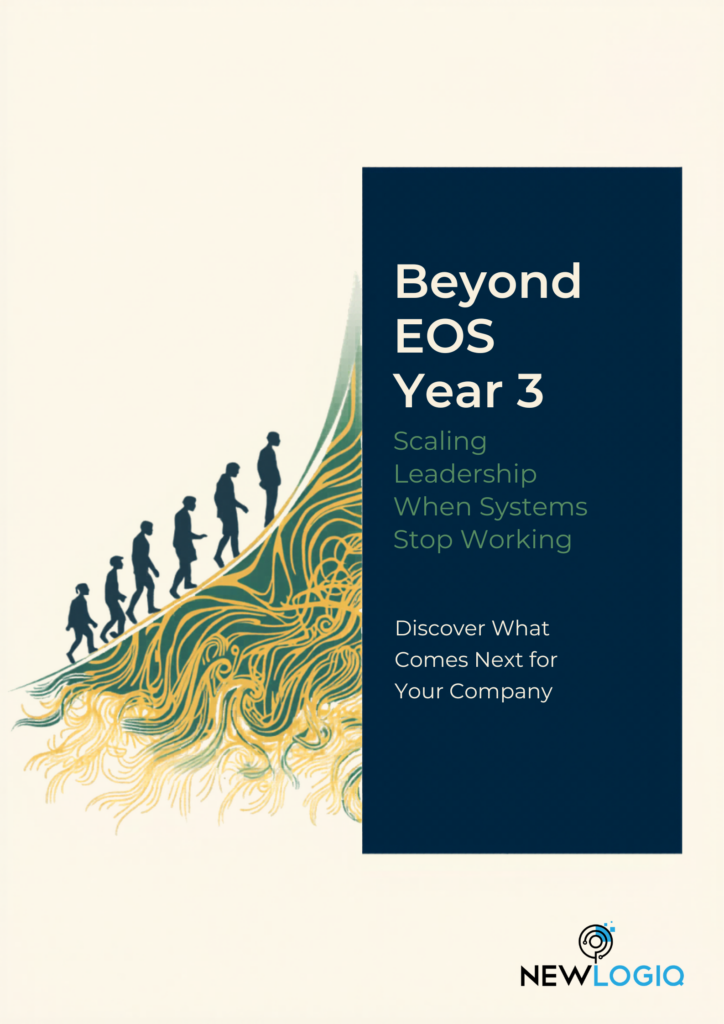
Is EOS Running Out of Steam? What Comes After Year 3

If you’re anything like the hundreds of leadership teams running EOS today, your journey probably started with chaos.

There were too many meetings (or none at all), unclear roles, dropped balls, and a vague sense that your business had potential, but no real structure to unlock it.

Then EOS showed up and it felt like finally someone handed you the manual. The Level 10 Meetings. The Rocks. The V/TO. It all made so much sense. And it worked.

For the first two, maybe three years, EOS helped you get traction. You gained clarity, accountability, and rhythm. People knew their roles. Meetings had structure. The company started to move as one.

But now?

Something’s off.

And you’re not the only one feeling it.

“We Got Traction… Now what?”

We’re hearing this more and more from CEOs and Integrators:

“EOS was great for getting us out of chaos. But now that we’re growing, it’s starting to feel… a little thin.”

If you’ve been running EOS for 3–5 years, and you’re starting to feel like you’re having the same conversations over and over again or your team’s outgrown the tools you’re not crazy.

This is what we call The EOS Plateau.

EOS does a fantastic job of helping small and mid-size businesses clean up their operations, get aligned, and move in the same direction. But when companies cross $10M, start scaling into multiple departments or locations, or are building a serious leadership team, they often find themselves needing more.

More depth. More strategic thinking. More tools to manage complexity.

Why EOS Starts to Lose Steam

To be clear: EOS isn’t broken. It’s just not built for what comes next.

Here’s what we see most often when companies hit the EOS ceiling:

1. It’s Too Simple for Your Complexity

EOS was intentionally designed to be simple. That’s one of its biggest strengths but also a limitation. As your company grows, that simplicity can start to feel restrictive.

2. Strategy is Getting Oversimplified

The Vision/Traction Organizer (V/TO) is great… at the beginning. But it doesn’t go deep enough when you need to craft competitive strategy, think through market positioning, or plan 3–5 years ahead.

3. No Real Cash Strategy

EOS barely touches cash flow or capital strategy. For companies looking to scale, that’s a big gap. Scaling requires a thoughtful financial engine cash, pricing, margins, and profitability levers.

4. The People Tools Don’t Go Deep Enough

“Right people, right seats” is helpful but it doesn’t give you a framework for developing future leaders, creating a true bench, or building talent pipelines. As your org chart grows, so does the need for more advanced people systems.

So… What Comes After EOS?

You don’t need to ditch EOS. You just need to evolve it.

For many mid-market companies especially those in the $10M to $100M range the natural next step is Scaling Up.

Created by Verne Harnish and built on the Rockefeller Habits, Scaling Up is a growth framework designed for companies that are past startup mode and looking to build real scale. It’s not just about traction it’s about building an organization that grows sustainably without burning out the leadership team.

EOS vs. Scaling Up: What’s the Difference?

Let’s break it down side-by-side:

EOSScaling Up
Best For$2M – $50M companies looking for structure$10M – $500M+ companies ready to scale
FocusExecution and alignmentStrategy, cash, people, and execution
ToolsV/TO, L10 Meetings, People AnalyzerOne-Page Strategic Plan, Cash Acceleration, People & Leadership Systems
People SystemsRight People, Right SeatsFunction Accountability Chart, Talent Development, Leadership Pipelines
Financial DepthBasic Scorecards and RocksFull cash strategy, Profit/X, pricing, margins
FlexibilityFixed system and termsModular tools, customizable to your company’s complexity
Coaching EcosystemEOS ImplementersCertified Scaling Up Coaches, Growth Summits, deep toolkits

The Bottom Line: You Didn’t Do Anything Wrong

If you’re starting to feel like EOS has run its course, that’s not a sign of failure.

It’s a sign of growth.

You used EOS to build a solid foundation. You cleaned up your systems. You got aligned. And now, your business is ready for the next level. It’s outgrowing the tools that got it here.

Think of EOS as high school for your company. Scaling Up is college and beyond.

What You Can Expect from Scaling Up

When companies graduate into Scaling Up, here’s what they usually find:

  • Deeper strategy tools to plan 3 – 5 years out, differentiate in the market, and align resources accordingly
  • Serious financial insights to drive profit and cash, not just top-line growth
  • People systems that help you build a real leadership team not just delegate work
  • Execution rhythms that work across multiple business units, locations, or divisions

It’s not about ditching EOS. In fact, many teams continue using Level 10 meetings or the People Analyzer for years. But they layer on Scaling Up to handle what EOS can’t: complexity, scale, and strategic depth.

Wrapping It Up

If you’re starting to feel EOS fatigue… it might not be burnout. It might be growth.

You’ve gotten your company out of chaos. Now it’s time to build something that lasts and grows beyond you.

Scaling Up might be the next chapter your company needs.

Want to Learn More?

This blog is part of a short series we’re doing to help business leaders think through how to scale smarter not harder. If you’re feeling stuck in the “EOS gap,” stay tuned.

There’s more to come.

Strategic Planning for Growth: Insights from Momentum Lab

Can a well-crafted strategic plan really help a business grow? For solopreneurs, having a clear plan is key to reaching their business goals.

Momentum Lab helps solopreneurs stay on track and meet their goals. It offers monthly masterclasses, a special ChatGPT assistant, and live Q&A sessions with a certified coach.

Momentum Lab gives solopreneurs the tools and advice they need to make effective plans. This helps them grow their business. For more information or to join, email momentum@newlogiq.com.

Key Takeaways

  • Understanding the importance of strategic planning for business growth.
  • Momentum Lab’s role in supporting solopreneurs through productivity tools and coaching.
  • The benefits of having a clear roadmap for achieving business goals.
  • How Momentum Lab’s resources can empower solopreneurs to drive growth.
  • The value of community support in achieving business objectives.

Understanding the Importance of Strategic Planning

Strategic planning is key for businesses to set clear goals and map out how to reach them. It’s a detailed method that lets companies make smart choices, use resources well, and adapt to market shifts.

Defining Strategic Planning

Strategic planning starts with defining a company’s mission, vision, and goals. It involves a deep look at the company’s current situation, including its strengths, weaknesses, opportunities, and threats. This helps businesses craft a strategy that fits their goals.

Companies with a growth mindset and flexibility usually do well. For example, Outschool shows how strategic planning can lead to success, no matter the size of the company.

Key Benefits for Businesses

The perks of strategic planning are many. It helps businesses:

  • Clarify their mission and vision
  • Set realistic and achievable goals
  • Enhance decision-making processes
  • Improve resource allocation
  • Respond effectively to market changes

These benefits help businesses scale up and perform better. For more on Momentum Lab’s strategic planning, email momentum@newlogiq.com.

Common Misconceptions

Despite its value, strategic planning is often misunderstood. Some think it’s a one-time thing or only for top management. But, it’s an ongoing effort that needs input from all parts of the organization.

The Strategic Planning Process

To grow sustainably, businesses need a solid strategic planning process. This process has key steps. It helps organizations know where they stand, where they want to go, and how to get there.

Analyzing the Current State

The first step is to look at where the organization is now. This means checking internal strengths, market trends, and who they compete with. Knowing this helps spot what’s working and what’s not, and what chances and risks there are.

Setting Vision and Mission Statements

After understanding the current situation, the next step is to set the vision and mission statements. The vision statement shows what the organization aims to become. The mission statement explains its purpose and main goals. These statements guide the strategic planning process.

“A clear vision and mission statement are essential for directing the strategic planning process and ensuring everyone is working towards the same goals.”

Establishing Goals and Objectives

With vision and mission in hand, the next step is to set clear, reachable business goals and objectives. These goals should match the overall strategy and be achievable in a set time frame. Coaching is key here, helping teams set realistic targets and make plans to achieve them.

Momentum Lab uses AI to turn insights into action, helping businesses outperform the market. For more information or to reach out, email momentum@newlogiq.com.

By taking these steps and using tools like strategic planning software and coaching, businesses can make a strong plan. This plan drives growth and success.

Conducting a SWOT Analysis

A SWOT analysis is key to understanding a business’s internal and external factors. It’s a tool for identifying Strengths, Weaknesses, Opportunities, and Threats. This helps companies see where they stand and make smart choices to grow and scale.

Identifying Strengths and Weaknesses

First, a SWOT analysis looks at a company’s strengths and weaknesses. Strengths are good things like a strong brand, skilled team, or new products. Weaknesses are things that might hold the company back, like high turnover, slow processes, or not enough resources.

Outschool’s research shows the value of using data to find top classes and improve or remove others. It also helps with pricing and formats. This way, businesses can better spot their strengths and weaknesses.

Opportunities and Threats in the Market

Next, a SWOT analysis looks at opportunities and threats outside the company. Opportunities are chances to grow, like new trends, tech, or markets. Threats are things that could harm the business, like more competition, rules changes, or economic troubles.

Knowing these, businesses can plan to use their strengths and opportunities. They can also work on their weaknesses and threats. For example, a company might use its brand to enter new markets or create new products to stay competitive.

For any inquiries or to learn more about Momentum Lab, please contact momentum@newlogiq.com.

Engaging Stakeholders in Planning

To hit business goals, it’s key to get stakeholders involved in planning. Newlogiq Momentum Lab values community and support in reaching these goals. It offers live Q&A sessions and a productivity assistant to help everyone work together.

Importance of Team Involvement

Getting the team involved in planning is vital. It makes sure everyone is on the same page with the company’s vision. Coaching is important here, helping team members know their part in reaching goals.

Team input also brings new ideas and solutions to the table. This teamwork leads to better strategies and their successful use.

Techniques for Gathering Feedback

Getting feedback is a big part of working with stakeholders. Newlogiq Momentum Lab uses many ways to get feedback that can be used. Regular updates and check-ins help spot what needs to change.

  • Conducting surveys and questionnaires to gather input from team members.
  • Organizing workshops and brainstorming sessions to encourage open discussion.
  • Utilizing digital tools for continuous feedback and monitoring progress.

For any questions or to find out more about Newlogiq Momentum Lab’s support for planning, email momentum@newlogiq.com.

Setting Measurable Objectives

Effective strategic planning starts with setting clear, measurable goals. These goals guide businesses toward their targets. By focusing efforts and resources, organizations can reach tangible results.

The SMART Criteria

The SMART criteria help set goals that are Specific, Measurable, Achievable, Relevant, and Time-bound. This method makes sure goals are clear and reachable. It helps avoid setting goals that are too vague or impossible to achieve.

  • Specific: Objectives should clearly define what is to be achieved.
  • Measurable: Progress should be quantifiable, allowing for accurate tracking.
  • Achievable: Objectives must be realistic based on available resources and constraints.
  • Relevant: Objectives should align with the overall strategic plan and business goals.
  • Time-bound: Establishing deadlines ensures timely progress and focus.

Tracking Progress Over Time

Tracking progress is key to strategic planning success. The Momentum AI platform helps businesses monitor their progress. It allows for the optimization of go-to-market strategies with confidence.

For better strategic planning, using tools and resources for tracking and adjustment is crucial. For more information or to learn about Momentum Lab, contact momentum@newlogiq.com.

Implementation of the Strategy

Strategic planning is not complete without effective implementation. This is what drives real results. Companies like Outschool have grown by creating action plans and analyzing data.

Creating an Action Plan

An action plan outlines the steps to achieve strategic objectives. It breaks down big goals into smaller tasks. Effective action plans are detailed, realistic, and have timelines.

“A good plan violently executed now is better than a perfect plan next week,” as the saying goes. This shows the importance of taking action. A comprehensive action plan helps organizations move towards their goals.

Assigning Responsibilities

For an action plan to succeed, responsibilities must be clearly assigned. This ensures accountability and timely task completion. Coaching is key, helping team members understand their roles and develop skills.

  • Identify team members’ strengths and weaknesses.
  • Assign tasks based on these strengths.
  • Provide necessary training and resources.

Monitoring and Adjusting

Monitoring progress is crucial for a strategic plan’s success. It involves tracking KPIs and making adjustments as needed. Scaling Up efforts can be informed by these insights, allowing businesses to adapt and grow.

“The key to successful scaling is not just about growing fast, but growing smart.”

For any inquiries or to learn more about Momentum Lab’s approach to strategic planning and implementation, please contact momentum@newlogiq.com.

Tools and Resources for Strategic Planning

The right tools and resources are key to better strategic planning for businesses. Good planning uses many tools and methods to analyze, plan, and put plans into action well.

Software Solutions for Planning

Using software can make planning easier. Momentum AI, from Newlogiq Momentum Lab, uses generative AI to boost Account-Based Marketing (ABM) programs. It offers top security and privacy, making it a strong choice for companies.

Software solutions offer many benefits, including:

  • Better data analysis
  • Improved team collaboration
  • Tracking progress in real-time

Essential Frameworks and Models

There are also frameworks and models to help with planning. Some include:

  1. SWOT analysis: Finds strengths, weaknesses, opportunities, and threats.
  2. Balanced Scorecard: Gives a full view of how well a company is doing.
  3. McKinsey 7S Framework: Helps improve how well a company works.

For more information or to find out how Newlogiq Momentum Lab can help with planning, email momentum@newlogiq.com.

Real-Life Case Studies of Success

Outschool’s case studies show how strategic planning can change a business. They look at different companies to see how planning helps reach goals.

Companies That Thrived Through Strategic Planning

Many companies have grown a lot by using strategic planning. For example, those who followed a Scaling Up strategy saw big increases. Coaching was key in helping them improve their plans and keep their focus.

Setting clear goals is a big part of success in strategic planning. Companies that did well had clear goals and plans to reach them.

Lessons Learned from Their Experiences

The case studies teach us a few important lessons. First, being able to change plans is key. Companies need to adjust to new market trends. Second, having a growth mindset helps businesses innovate and stay competitive.

If you have questions or want to know more about Momentum Lab, email momentum@newlogiq.com. Learning from others’ success can help your business grow and achieve its goals.

Overcoming Challenges in Strategic Planning

Effective strategic planning needs a clear vision and the skill to tackle challenges. Organizations face many obstacles when trying to put their plans into action.

Common Obstacles Organizations Face

One big challenge is resistance to change. Employees and stakeholders might prefer old ways and resist new ideas. Effective communication is crucial to beat this. It’s important to explain the benefits of the plan and how it fits with the company’s business goals.

Another big hurdle is not having enough resources, like money, people, or technology. Companies must choose their priorities and use their resources wisely. As a business strategist said,

“The key to successful strategic planning is not just about having a plan, but also about having the resources to execute it.”

Tips for Effective Problem Solving

To tackle these challenges, organizations should be proactive in solving problems. This means:

  • Encouraging a culture of innovation and creativity
  • Fostering open communication and teamwork
  • Regularly checking and tweaking the strategic plan

By being flexible and strong, companies can get through the hurdles of strategic planning and keep their eyes on their business goals. For more information or help with strategic planning challenges, email momentum@newlogiq.com.

Momentum Lab offers resources and support to help solopreneurs face challenges and stay on track. They make sure entrepreneurs have the tools they need to succeed in their strategic planning.

The Future of Strategic Planning

Businesses are always changing, and strategic planning is key to success. Newlogiq Momentum Lab leads the way with coaching and new solutions. They help organizations grow and succeed.

Emerging Trends

AI and other technologies are changing strategic planning. The Momentum AI platform is a great example. It helps businesses make smart decisions and stay competitive.

Technology in Planning

Technology is playing a bigger role in planning. Advanced tools and platforms make planning easier, improve teamwork, and boost growth.

For businesses to stay ahead, they must adopt these new technologies. To find out how Newlogiq Momentum Lab can help with your planning, email momentum@newlogiq.com.

How Momentum Lab Empowers Both CEOs and Their Key Leaders

Can companies really succeed without everyone being on the same page? The answer is yes, but only if they understand the importance of being in sync.

Momentum Lab helps companies make exceptional hardware products by getting everyone, processes, and products working together. This teamwork is essential for CEOs and their leaders to move their companies forward.

Want to know how Momentum Lab can help your company? Reach out to momentum@newlogiq.com.

Key Takeaways

  • Momentum Lab aligns people, processes, and products for hardware product success.
  • Effective alignment is crucial for CEOs and key leaders.
  • Momentum Lab empowers companies to deliver exceptional hardware products.
  • Contact Momentum Lab for more information on driving organizational success.
  • Synchronization is key to achieving exceptional success.

The Role of a CEO in Modern Businesses

In today’s fast-paced business world, the CEO’s role is more important than ever. They make key decisions, lead the company culture, and drive growth. Good CEOs know how crucial CEO support is for their leaders. They create a team environment that encourages business partnership at every level.

Defining the CEO’s Responsibilities

CEOs have many responsibilities. They set the company’s strategy, make big decisions, and keep an eye on finances. They also need to be visionaries, predicting market trends and adjusting the company’s path.

CEOs also build and keep a strong leadership team. They find, grow, and keep the best talent. This helps the company stay competitive and ready for the future.

Strategic Decision-Making

CEOs make strategic decisions to move the company forward. They look at market data, weigh risks, and find growth opportunities. They balance today’s needs with tomorrow’s goals, making choices that help the company now and later.

Good decision-making comes from knowing the company’s strengths, weaknesses, and rivals. CEOs must share their decisions clearly with everyone involved.

Leadership and Company Culture

CEOs shape their company’s culture. They set the example, influencing how people work together and with the company’s mission. A good culture boosts employee engagement, productivity, and keeps them around.

To build a great culture, CEOs must lead by example. They should show the values and behaviors they want from their team. This means being open, working together, and celebrating success.

For more on how Momentum Lab can help CEOs and their teams, email momentum@newlogiq.com.

Understanding the Second-in-Command Position

Knowing what the second-in-command role is key for good leadership. This role is crucial in a company’s leadership, helping the CEO make big decisions and push strategies forward.

Key Qualities of a Successful Second-in-Command

A good second-in-command needs certain qualities. They must think strategically, communicate well, and create a team atmosphere. These skills help them support the CEO and help the company succeed.

Executive coaching is very helpful for these qualities. It helps the second-in-command improve their leadership, make better decisions, and handle tough business issues.

Differences Between a CEO and Second-in-Command

The CEO sets the company’s direction. The second-in-command makes sure these plans work and are carried out. They need to know the company’s goals well and motivate the team to reach them.

The second-in-command also needs to match the CEO’s leadership style. They fill in gaps and offer support when needed. This teamwork is essential for a strong leadership team.

The Importance of Trust and Collaboration

Trust and teamwork are vital for the second-in-command. Building trust helps with open communication, teamwork, and success for everyone.

For more on building effective leadership teams, email momentum@newlogiq.com. The second-in-command role needs trust and teamwork. Executive coaching helps develop these important qualities.

The Partnership Between CEOs and Second-in-Command

The partnership between CEOs and their second-in-command is crucial for success. It’s based on trust, clear communication, and defined roles.

Enhancing Communication

Good communication is key in any business partnership. CEOs and their second-in-command must share ideas and concerns openly. Regular talks and open dialogue prevent misunderstandings and keep goals in line.

Encouraging feedback also strengthens the partnership. By listening to each other, they can spot and fix problems together.

Balancing Responsibilities

It’s important for CEOs and their second-in-command to balance responsibilities. The CEO focuses on big decisions and outside relations. The second-in-command handles day-to-day operations and internal matters.

This setup lets the team work well together. The CEO sets the direction, and the second-in-command makes sure things run smoothly.

Navigating Challenges Together

Every business faces hurdles, and CEOs and their second-in-command must tackle them together. Presenting a united front helps manage crises and make tough choices.

In tough financial times, they can work as a team. They find ways to save money, adjust resources, and keep staff morale up. Their teamwork helps the company get through hard times.

For more on building a strong partnership, email momentum@newlogiq.com.

Momentum Lab’s Unique Approach

Momentum Lab focuses on teamwork and clear results. It aims to help CEOs and their leaders succeed. This approach boosts business growth through strong leadership.

Tailored Leadership Programs

Momentum Lab has tailored leadership programs for each company. These programs tackle the unique problems CEOs and leaders face. They give the tools and strategies needed for success.

These programs are made with the help of industry experts. They are based on the latest research in leadership. This ensures the programs meet each company’s specific needs.

Collaborative Workshops

Momentum Lab also has collaborative workshops for leaders. These workshops let leaders share their experiences and learn from each other. They help find new ways to tackle common problems.

The workshops are interactive, focusing on practical use and real scenarios. They create a team environment. This helps leaders build strong relationships and understand each other’s challenges better.

Measurable Outcomes

Momentum Lab’s big plus is its focus on measurable outcomes. It sets clear goals and tracks progress. This way, it can improve its programs as needed.

This focus on results means the programs actually work. Leaders can make real changes in their companies. For more details on how Momentum Lab can help your company, email momentum@newlogiq.com.

Building Effective Leadership Teams

Creating strong leadership teams is key for any business to thrive. It begins with knowing how CEOs and their second-in-command work together. A good team drives decisions and builds a positive work culture.

Importance of Team Dynamics

The way a team works together greatly affects a company’s success. Effective communication and trust are vital for a team to excel. When CEOs and their second-in-command work well together, they can grow the business and meet their goals.

A positive team dynamic helps leaders face challenges better. It creates an environment where everyone can work together smoothly. This way, teams can tackle problems more effectively and efficiently.

Conflict Resolution Strategies

Conflicts in a leadership team are common, but how they’re solved is what counts. Effective conflict resolution strategies keep the team positive. This means dealing with issues quickly and constructively, encouraging everyone to speak up, and finding solutions that help the company.

Using these strategies, teams can turn conflicts into chances for growth. For more on building strong leadership teams, email momentum@newlogiq.com.

Case Studies of Successful Partnerships

Momentum Lab has helped many CEOs and their leaders form strong partnerships. These partnerships boost business growth and improve leadership skills. They are based on trust, clear communication, and a shared understanding of the company’s goals.

Well-Known Examples

Many famous companies have grown thanks to great partnerships between their CEOs and second-in-command. For example, a top tech firm grew fast because of its CEO and COO working together. This teamwork allowed the company to stay ahead in the market.

Another example is a big retail chain that boosted its sales with a leadership program from Momentum Lab. The program improved the CEO-COO partnership. This led to better decision-making and planning.

Lessons Learned

These stories teach us important lessons. First, effective communication is key. CEOs and their leaders need to talk openly to stay on the same page.

Second, trust is essential. When CEOs and their leaders trust each other, they can face challenges better and make big decisions that help the company grow.

  • Regular feedback keeps trust and alignment strong.
  • Working together on goals ensures everyone is moving in the same direction.
  • Being able to change plans is important for success.

Industry Insights

Studies show that companies with strong partnerships between CEOs and their leaders do better than others. Momentum Lab’s help in building these partnerships has been key to its clients’ success.

For more details on how Momentum Lab can help your leadership team, email momentum@newlogiq.com.

Developing Leadership Skills

Building leadership skills is a complex task that needs strategic training and ongoing learning. Today’s fast business world demands that CEOs and top leaders have the newest skills to tackle challenges.

Training and Development Initiatives

Strong training and development initiatives are key to better leadership. These efforts include executive coaching, where seasoned coaches help leaders spot areas for growth and create personal plans for improvement.

Companies can also set up training programs on strategic decision-making, leadership, and company culture. These efforts boost the abilities of CEOs and their teams. They also encourage a culture of ongoing improvement.

Continuous Learning Opportunities

Continuous learning opportunities are essential for keeping leaders up-to-date. This can be through workshops, seminars, and online courses on the latest industry trends and technologies.

For example, a second-in-command can greatly benefit from leadership development programs. These programs help improve strategic thinking and problem-solving. By investing in continuous learning, companies can make sure their leaders stay flexible and competitive.

For more details on improving leadership skills, please reach out to momentum@newlogiq.com.

Measuring Leadership Effectiveness

It’s crucial to assess how well leaders do their job. Good leaders help their company succeed, create a positive work environment, and make sure everyone’s goals match the company’s plan.

Key Performance Indicators

Organizations use Key Performance Indicators (KPIs) to check if leaders are doing well. These KPIs track things like team success, how happy employees are, and if they meet their goals.

CEOs and top leaders get a lot from KPIs. They show how well these leaders are pushing the company forward. Checking these KPIs often helps spot what’s going right and what needs work.

Regular Feedback Mechanisms

Regular feedback is also key to judging a leader’s success. Hearing from team members, peers, and bosses gives a full picture of a leader’s performance.

Having feedback often helps leaders know their good points and areas to get better. For tips on boosting leadership skills, email momentum@newlogiq.com.

By mixing KPIs with regular feedback, companies can really understand how well their leaders are doing. This helps grow current leaders and prepare future ones.

Scaling Leadership Practices Across Organizations

As organizations grow, it’s key to scale leadership practices for lasting success. Good leadership is about managing today and planning for tomorrow. Momentum Lab helps with this by offering executive coaching and leadership programs.

Adapting to Business Growth

Business growth brings new challenges that need adaptive leadership. Companies must scale their leadership to meet growing demands. This means developing leaders who can handle complex situations and make smart decisions. Momentum Lab’s leadership development aims to create agile leaders for growth and innovation.

Implementing Best Practices

It’s vital to implement best leadership practices for a cohesive team. This includes teamwork, learning, and executive coaching to improve leadership. These steps help ensure leaders can drive business success.

For scaling leadership, partnering with experts is crucial. Momentum Lab provides the support needed for scalable leadership. For more info, contact momentum@newlogiq.com.

  • Develop agile leaders who can drive growth and innovation.
  • Foster a culture of collaboration and continuous learning.
  • Leverage executive coaching to enhance leadership skills.

Future Trends in Leadership Development

Technology is changing how we develop leaders. As businesses grow fast, they need strong leaders more than ever. The second-in-command is key in helping CEOs succeed.

Impact of Technology on Leadership Roles

Technology is changing how leaders work. Digital literacy is now a must for leaders. They need to use tech to make smart choices and encourage learning.

Technology makes leaders more flexible and quick to respond. With tools like AI, they can understand their business better and make informed decisions.

Evolving Skill Sets for Executives

As tech advances, so do the skills needed for leaders. Adaptability and a love for learning are key. Leaders must handle fast changes and lead through uncertainty.

The bond between CEOs and their second-in-command is growing stronger. Working together is vital for success and facing market challenges.

For more on leadership development, reach out to momentum@newlogiq.com.

Testimonials from Momentum Lab Clients

Momentum Lab has helped CEOs and their leaders achieve great things. Its success is shown in the transformative experiences of its clients.

Success Stories of CEOs

CEOs who worked with Momentum Lab say the tailored leadership programs were crucial. One CEO said the program helped him refine his leadership style. This led to better team work and more productivity.

Another CEO loved the collaborative workshops. They gave valuable insights into leadership and built trust in their team.

Experiences of Second-in-Command Leaders

Second-in-command leaders have also seen big benefits. One leader talked about the continuous learning opportunities. These helped them support their CEO better.

Another second-in-command leader mentioned the measurable outcomes. They said it helped them align with the CEO’s vision. This made their team more cohesive and efficient.

For more information on how Momentum Lab can support your leadership journey, please contact momentum@newlogiq.com.

Conclusion: The Future of Leadership Alignment

Effective leadership is key for today’s businesses to thrive. Momentum Lab helps CEOs and leaders grow through special programs and workshops.

Effective Leadership Strategies

Building strong partnerships is vital for success. It means better communication and working together to solve problems. This leads to a strong partnership in business.

Executive coaching is also crucial. It helps leaders improve and keep up with business changes. This way, companies can always be learning and getting better.

Long-Term Partnerships

Creating lasting partnerships needs trust and teamwork. CEOs and leaders must understand each other’s roles well. This way, they can grow the business together.

Want to know how Momentum Lab can help your leadership? Contact us at momentum@newlogiq.com.

Scaling Your $1M-$5M Business with the Right Support System

Can your business grow fast without losing its edge? Companies making $1M to $5M face a big challenge. They need to expand operations while staying efficient.

Efficient scaling means more than just making more money. It’s about building a scalable business model that can handle market changes. For businesses looking to grow, knowing the right strategies and support is key.

To tackle this, focus on planning, efficient operations, and using tech for business growth. For more tips on scaling your business, email us at momentum@newlogiq.com.

Key Takeaways

  • Know your current business to spot areas for betterment.
  • Create a scalable business model that meets market needs.
  • Use technology to boost growth and efficiency.
  • Plan strategically to manage the scaling journey.
  • Get expert advice to help scale your business.

Understanding the Challenges of Small Business Scaling

Scaling a business is tough. It requires knowing the hurdles ahead. Businesses face many obstacles as they grow.

Common Obstacles for Growing Businesses

Growing businesses struggle with keeping quality high, managing resources well, and adapting to market changes. Maintaining quality is key for happy customers. Effective resource management helps meet demands without hurting operations.

Assessing Your Current Operations

Checking your current operations is vital. Look at customer satisfaction, market demand, and financial performance. This helps make smart scaling decisions.

The Importance of Timing in Scaling

Timing is everything when scaling. Scaling too soon or too late can be costly. Plan carefully to grow at the right time.

Need help scaling your business? Reach out to Momentum Lab at momentum@newlogiq.com for personalized advice.

Building a Strong Foundation for Growth

To grow your business, you need a solid foundation. This means setting up a base that supports growth, keeping things efficient and profitable. It also helps you stay ahead of the competition.

Establishing Clear Business Goals

Clear goals are essential for your company’s growth. They guide you in defining what makes your business unique and how you make money. Understanding your costs is also crucial. This way, you can focus on a strategy that moves your business forward.

Defining your value proposition is key. It sets you apart from others and draws in the right customers.

Developing a Scalable Business Model

A scalable model grows with the market without losing quality or profit. It’s about setting up systems that work well as your business gets bigger. Using technology to automate tasks is a great way to scale.

For more on making your business scalable, reach out to momentum@newlogiq.com.

By focusing on these areas, you can lay a strong foundation for growth. This includes both internal strategies and understanding outside factors like market trends and customer needs.

Leveraging Technology to Facilitate Growth

As businesses grow, using technology becomes key. It helps make things more efficient and helps make better decisions. With the right tech, businesses can work better, be more productive, and grow.

Choosing the Right Software Tools

Finding the right software is crucial for business growth. Tools like CRM systems and project management software are important. It’s important to pick tools that fit your business needs and work well together.

  • CRM Systems: Help with customer engagement and sales tracking.
  • Project Management Tools: Make team work and task management better.
  • Accounting Software: Simplifies financial tasks and reports.

For help with using technology for growth, email momentum@newlogiq.com. They can show you how tech can fit your business.

Automating Repetitive Tasks

Automation is a big help for business efficiency. It lets businesses do more important things by automating simple tasks.

“Automation is not just about reducing labor; it’s about augmenting human capability to achieve more.”

Here are some tasks that can be automated:

  1. Email marketing campaigns
  2. Data entry processes
  3. Customer service chatbots

Utilizing Data Analytics for Insights

Data analytics is key for business growth. It gives insights into customer behavior, market trends, and how well things are working.

With data analytics, businesses can:

  • Make smart strategic decisions
  • Find ways to get better
  • Improve customer experiences

In summary, using technology is vital for business growth. By picking the right tools, automating tasks, and using data analytics, businesses can succeed in a tough market.

Creating a Support Network

As your business grows, a strong support network is key. It helps you face the challenges of growth. This network offers guidance, support, and resources to help you overcome obstacles.

Finding the Right Mentors

Mentoring is a big part of a support network. The right mentors can guide you with their experience. They help you make smart decisions and avoid mistakes.

  • Look for mentors at industry events or through professional groups.
  • Get to know potential mentors to see if you’re a good match.
  • Tell your mentors about your goals and what you need from them.

Building Relationships with Peers

It’s also important to connect with peers. They can offer support, share their experiences, and give you a fresh view on problems. You can meet peers at networking events, conferences, or online groups.

“Surround yourself with people who are better than you, and empower them to do their best work.”

Richard Branson

Engaging with Professional Organizations

Joining professional organizations in your field is also helpful. These groups offer resources, training, and chances to network. Using the Scaling Up framework can help your business grow efficiently.

For more on building a support network, email momentum@newlogiq.com. Creating a strong network takes time and effort. But it’s essential for your business’s long-term success.

Financial Management for Scaling Businesses

Scaling a business from $1M to $5M requires a solid financial plan. This plan includes understanding funding, managing cash flow, and budgeting for growth. These steps are key to keeping the business financially stable and successful.

Understanding Funding Options Available

Knowing the different funding options is crucial. Businesses can look into:

  • Venture Capital: Good for fast-growing companies.
  • Angel Investors: Best for startups and early stages.
  • Loans and Credit Lines: Great for expansion needs.
  • Crowdfunding: Useful for businesses with a strong product or service.

Monitoring Cash Flow Effectively

Managing cash flow is essential for daily business operations. This means:

  1. Checking cash flow statements often.
  2. Efficiently handling accounts receivable and payable.
  3. Keeping a cash reserve for unexpected costs.

For help with financial management for scaling, contact momentum@newlogiq.com.

Budgeting for Growth Initiatives

Budgeting is vital for financial planning, even more so for growth. Businesses should:

  • Set clear financial goals and objectives.
  • Effectively allocate resources for growth.
  • Regularly review and adjust the budget as needed.

By focusing on these areas, businesses can build a strong financial base for scaling.

Marketing Strategies to Drive Your Growth

Effective marketing strategies are key for growing your business. They help you understand your audience and use the best marketing methods. This way, you can boost your brand, get more leads, and increase sales.

Defining Your Target Audience

Knowing your target audience is the first step in a good marketing plan. It means finding out who they are, what they like, and how they behave. This helps you make campaigns that really speak to them.

  • Do market research to learn what your audience wants and likes.
  • Use data analytics to see how customers act.
  • Make buyer personas to help guide your marketing.

Digital Marketing Techniques for Small Businesses

Digital marketing has many tools for small businesses to grow. Some of these include:

  1. Email Marketing: Build an email list and send campaigns to help leads grow and convert.
  2. Search Engine Optimization (SEO): Make your website better so it shows up more in search results. This brings more people to your site.
  3. Pay-Per-Click (PPC) Advertising: Use ads to find your audience and bring them to your website.

Leveraging Social Media and Content Marketing

Social media and content marketing are great for connecting with your audience and making your brand known. By making and sharing good content on social media, you can draw in and keep customers.

For more info on marketing strategies for business growth, contact momentum@newlogiq.com.

Recruiting and Retaining Talent

To grow sustainably, businesses must focus on hiring and keeping skilled workers. This means finding the right people, training them well, and creating a positive work culture. Such a culture boosts productivity and loyalty.

Hiring the Right People for Growth

Finding the right talent starts with knowing what skills your business needs. You must analyze your operations and goals. This helps you write job ads that draw in the right candidates. Talent acquisition is about more than just filling jobs; it’s about getting people who can help your business grow.

Implementing Training Programs

After hiring the right team, invest in their growth with training. This boosts their skills and shows you care about their development. It leads to happier employees and less turnover. Training should keep up with the needs of both employees and the company.

Fostering a Positive Company Culture

A positive work culture is key to success. It’s about making sure employees feel valued and supported. This can be done by encouraging open communication, celebrating successes, and supporting work-life balance. A strong company culture attracts and keeps top talent, driving business growth.

For advice on hiring and keeping talent, email momentum@newlogiq.com. By focusing on talent acquisition and retention, businesses can build the team needed for growth.

Customer Engagement and Retention

Keeping customers engaged and loyal is key for a business to grow. Good strategies for customer engagement and retention help increase satisfaction and loyalty. This is vital for business growth.

Building Loyalty Through Quality Products

Offering high-quality products is a great way to win customer loyalty. Happy customers tend to come back and tell others about the brand. It’s important for businesses to keep improving their products to stay ahead.

For more information on customer engagement and retention strategies, you can contact momentum@newlogiq.com.

Utilizing Customer Feedback for Improvement

Listening to customer feedback is essential for understanding what they want. By using feedback, businesses can spot areas to improve and make better choices. This boosts satisfaction and builds loyalty.

To use customer feedback well, businesses need a clear plan. They should use surveys, social media, and reviews to gather insights. This helps them make smart decisions based on what customers want.

Putting a focus on customer engagement and retention can help businesses grow. It’s crucial for those aiming to reach $5M from $1M. This approach ensures long-term success and keeps the business competitive.

Streamlining Operations and Processes

As businesses grow, making operations more efficient is key to success. This means cutting costs and making customers happier.

To start, businesses need to find where they can improve. They should look at their current processes, find bottlenecks, and see where resources are wasted.

Identifying Areas for Efficiency

Finding where to improve is a big step. It means looking at workflows, cutting out unnecessary tasks, and automating tasks. This way, businesses can save money and work better.

Key strategies for identifying areas for efficiency include:

  • Conducting regular audits of current processes
  • Engaging with employees to understand pain points
  • Utilizing data analytics to identify bottlenecks

Implementing Standard Operating Procedures (SOPs)

After finding where to improve, it’s time for SOPs. SOPs make sure things are done the same way, cut down on mistakes, and make things more efficient.

Best practices for implementing SOPs include:

  • Documenting every step of a process
  • Training employees on new procedures
  • Regularly reviewing and updating SOPs

For businesses wanting to improve, getting help from experts is smart. Reach out to experts at momentum@newlogiq.com for advice on making operations better.

Measuring Success: Key Performance Indicators (KPIs)

To grow sustainably, it’s key to know how to measure success with KPIs. Success measurement means setting up the right KPIs and checking them often. This helps businesses see how they’re doing and where they can get better.

Defining Relevant KPIs for Your Business

Choosing the right KPIs is crucial for checking if your business plans are working. These indicators should match your business goals and show what’s important in your operations. For example, if you want happier customers, look at customer retention, satisfaction scores, or net promoter scores.

It’s important to pick KPIs that are measurable, achievable, relevant, and time-bound (SMART). This makes sure the data you get is useful and can be acted on. For instance, aiming to keep more customers by 15% in a year is clear, measurable, and has a deadline.

Regularly Reviewing Performance Metrics

After setting up KPIs, it’s important to check them often. This means watching the data, spotting trends, and making changes when needed. Regular checks help businesses stay focused on their goals and make smart choices.

Using data analytics tools can make this easier, giving you quick insights into how you’re doing. For more on using KPIs to measure success, email momentum@newlogiq.com.

By focusing on the right KPIs and checking them often, businesses can grow, work better, and reach their goals. This active approach to measuring success helps businesses grow well and keep growing.

Preparing for Future Challenges and Opportunities

As businesses grow, they face new challenges and opportunities. They need to be flexible, plan strategically, and understand the market well.

Adapting to Change

Keeping up with market changes is key. Businesses must be quick to respond to what customers want. This way, they can grow and succeed in the long run.

Crafting a Long-Term Vision

Having a long-term plan is essential. It guides business decisions and keeps goals in sight. Businesses set clear goals, track progress, and adjust plans as needed.

For help with long-term planning and facing future challenges, businesses can get expert advice. Reach out to momentum@newlogiq.com. They offer coaching to boost business growth and success.

The Power of Non-Competitive Peer Groups in Scaling Your Business

Are you using the power of collaborative networks to grow your business? Today, entrepreneurs and leaders are always looking for new ways to grow and stay ahead. They want to keep their businesses competitive.

Non-competitive peer groups are a special place for professionals to share ideas and solve problems together. They connect with others who are not their direct rivals. This way, businesses can gain a lot from others’ experiences and knowledge.

For those aiming to grow their business, these groups are a goldmine. They offer great chances to network and learn from others. To find out more about how non-competitive peer groups can help your business grow, email momentum@newlogiq.com.

Key Takeaways

  • Non-competitive peer groups foster innovation and collaboration among professionals.
  • These groups provide a platform for sharing ideas and discussing challenges.
  • Businesses can tap into a wealth of knowledge and experience, driving mutual growth.
  • Networking opportunities and access to shared knowledge are invaluable for scaling businesses.
  • Connecting with like-minded individuals can drive business success.

Understanding Non-Competitive Peer Groups

Non-competitive peer groups help businesses grow together. They focus on helping each other, not competing. This way, everyone can succeed without stepping on each other’s toes.

Definition and Key Characteristics

These groups bring together people or businesses with similar goals. They share a collaborative mindset, mutual respect, and a shared commitment to collective success. This creates a safe space for sharing and learning.

For businesses looking to grow, these groups are a big help. They offer a network of peers who get the ups and downs of scaling. Together, they can learn from each other and find ways to overcome hurdles.

Why Non-Competitive?

The non-competitive aspect is key to their success. Without competition, members can be more open and honest. They share their real challenges without fear of being seen as weak.

In a non-competitive setting, businesses can focus on their own growth. This reduces stress and anxiety. It lets them be more innovative and take risks, knowing they have their peers’ support.

The Psychology Behind Peer Groups

Several psychological principles make non-competitive peer groups effective. The principle of social proof helps. People are more likely to follow if they see others doing it.

The need for belonging is also met. Members feel part of a community that supports them. Plus, the power of collective wisdom lets them make better decisions. This collective approach is a big driver of success.

Benefits of Joining Non-Competitive Peer Groups

Joining non-competitive peer groups offers many benefits. Businesses gain access to a wealth of knowledge and experience. This creates a space for growth and innovation.

Enhanced Collaboration and Support

One key benefit is the support and collaboration these groups provide. Members can share their challenges and successes. They get empathetic and practical advice from peers who know their industry well.

  • Regular meetings offer consistent support and feedback.
  • Members get guidance on complex business decisions.
  • Trust and cooperation are built, leading to open dialogue.

Shared Knowledge and Resources

These groups allow members to share knowledge and resources. This reduces costs and efforts. It leads to innovative solutions and improved operational efficiencies.

  1. Members pool their expertise to solve common challenges.
  2. Shared resources include technology and professional services.
  3. Collective problem-solving results in effective solutions.

Networking Opportunities

Being part of a non-competitive peer group also opens up valuable networking opportunities. Members meet like-minded professionals. This can lead to new partnerships, collaborations, or business opportunities.

“The right peer group can open doors to new opportunities and provide the support needed to navigate complex business landscapes.”

For more information on non-competitive peer groups and their benefits, contact Momentum Lab at momentum@newlogiq.com. By joining a non-competitive peer group, businesses can gain more momentum and scalability.

How Non-Competitive Peer Groups Differ from Competitive Groups

Non-competitive peer groups focus on everyone’s success, not just one person’s. This approach creates a team atmosphere where everyone helps each other. This leads to growth and learning for all.

Key Differences in Approach

These groups work together, sharing knowledge and resources. This is different from competitive groups, where it’s all about winning. The competitive vibe can cause stress and mistrust.

In non-competitive groups, everyone talks openly and supports each other. It’s a place where you can share your wins and challenges. For more info, email momentum@newlogiq.com.

Impact on Business Growth

These groups help businesses grow by solving problems together. Everyone brings their unique ideas and skills. This leads to better solutions and plans.

  • Enhanced collaboration and support
  • Shared knowledge and resources
  • Increased networking opportunities

Non-competitive groups focus on helping each other, while competitive ones are all about winning. This big difference affects how well businesses do in these groups.

Emotional Well-Being in Non-Competitive Settings

Being in a non-competitive group makes you feel better emotionally. It reduces stress and builds a community feeling. People feel valued and happy, which boosts job satisfaction.

By aiming for everyone’s success, these groups build a positive community. This is great for both individuals and their businesses. Joining one can help your business grow in a healthy way.

Building a Non-Competitive Peer Group

Creating a non-competitive peer group needs careful thought. It’s key for businesses wanting to grow by working together.

Identifying the Right Members

Finding the right people for your group is the first step. Look for those who have the same business aims and values. It’s important to find members who support and grow together. For help, email momentum@newlogiq.com.

Setting Group Objectives

After picking the right members, set clear goals for the group. These goals should help the business grow. Having specific, measurable goals keeps everyone focused and motivated.

  • Define the group’s mission and vision.
  • Set specific, achievable goals.
  • Establish a timeline for achieving these goals.

Establishing Ground Rules

Ground rules are essential for a smooth-running group. They should promote trust, respect, and privacy. These rules ensure everyone feels safe sharing their stories and problems.

To build a great non-competitive peer group, think about who joins, what goals you set, and the rules you follow. By doing this, businesses can create a supportive space for growth and scaling.

Strategies for Engaging in Non-Competitive Peer Groups

To get the most out of non-competitive peer groups, it’s key to engage well. Being active in these groups can really help your business grow. Creating a space where everyone feels safe and open is a good start.

Active Participation Techniques

Being involved is what makes a peer group work. Everyone should share their stories, wins, and losses. Regular meetings, peer mentoring, and solving problems together can boost participation. For example, Momentum Lab uses peer-led groups to great success.

“The strength of non-competitive peer groups is in their safe space for trying new things and learning,” notes an expert. This shows how important it is to make a space where everyone feels free to share.

“Collaboration is key to unlocking the full potential of peer groups.”

— Industry Leader

Effective Communication Skills

Good communication is crucial for peer groups to thrive. Everyone needs to speak clearly and with respect. Using active listening and clarifying questions can help. Also, setting clear communication rules is vital.

  • Practice active listening to get others’ views.
  • Use clarifying questions to make sure you understand.
  • Be respectful and open in your talks.

Sharing Best Practices

Sharing what you know is a big part of peer groups. Members should be ready to share their insights. Workshops, case studies, or peer-to-peer coaching can help. This way, everyone can learn from each other and apply new ideas to their businesses.

For more tips on joining non-competitive peer groups, email momentum@newlogiq.com. By using these strategies, businesses can get more out of peer groups and grow faster.

Case Studies: Successful Non-Competitive Peer Groups

Non-competitive peer groups are changing how businesses grow. They offer a supportive network. Many case studies show their success in various fields.

Entrepreneurs Group

An entrepreneurs group formed a non-competitive peer network. They focused on sharing knowledge and resources. This led to better collaboration and support.

They overcame challenges and grew their businesses significantly.

  • Increased business revenue by 20% within the first year.
  • Expanded their professional network, leading to new business opportunities.
  • Developed a mentorship program that supported new entrepreneurs.

Non-Profit Collaborations

Non-profit groups also benefit from non-competitive peer groups. They share best practices to increase their impact. For example, a group of environmental non-profits pool their resources and expertise.

  1. Implemented a joint fundraising strategy that increased donations by 30%.
  2. Shared volunteer networks, enhancing the reach of their programs.
  3. Developed a comprehensive guide to best practices in environmental conservation.

Creative Industry Networks

In the creative industry, non-competitive peer groups boost innovation. They provide a safe space for artists to share and get feedback. This helps them improve their craft and succeed.

If you want to learn more about these groups, contact us at momentum@newlogiq.com. We have detailed case studies available.

Challenges and Solutions in Non-Competitive Peer Groups

Non-competitive peer groups face challenges that can affect their success. These groups offer benefits like better collaboration and shared knowledge. But, they also have unique obstacles that can hinder their effectiveness.

Common Issues Faced

These groups often struggle with conflicts, keeping focus, and ensuring everyone participates. These problems can come from different opinions, varying commitment levels, or outside pressures.

Conflicts can happen when members disagree or personal issues affect the group. To solve this, it’s key to have clear communication and rules.

Tips for Addressing Conflicts

It’s important to handle conflicts well to keep non-competitive peer groups going. Here are some tips:

  • Encourage open and respectful dialogue among members.
  • Have a clear way to solve disputes.
  • Create an environment of empathy and understanding.

Using these strategies can help groups deal with conflicts better and stay positive.

Keeping the Group Focused

Keeping the group focused is another challenge. To stay on track, it’s important to:

  1. Set clear goals and check progress often.
  2. Make sure everyone is involved and contributing.
  3. Use tools and resources, like those from Momentum Lab, to help with activities.

For more tips on improving your non-competitive peer group, contact momentum@newlogiq.com for help and advice.

Understanding and solving common challenges can help non-competitive peer groups succeed. They can support their members in reaching business scaling goals.

Measuring Success in Non-Competitive Peer Groups

Success in non-competitive peer groups is measured in many ways. It looks at how well the group helps businesses grow and how well they work together. This approach helps everyone in the group do better.

Key Performance Indicators

To see if a non-competitive cohort is doing well, we need to set key performance indicators (KPIs). These KPIs should match the group’s goals. They might include:

  • Member retention rates
  • Level of participation in group activities
  • Progress toward individual business goals
  • Frequency and quality of feedback shared among members

By watching these KPIs, leaders can see what’s working and what needs work. This keeps the group strong and supportive.

Feedback Mechanisms

Having good feedback mechanisms is key for a group to keep getting better. This can be done by:

  1. Regular surveys to see how happy members are
  2. Open forums for talking about challenges and wins
  3. One-on-one meetings between members and leaders

These ways of getting feedback help understand what members need. This lets the group make changes to help everyone more.

Celebrating Milestones Together

Celebrating milestones is important for a positive group atmosphere. It shows the group’s dedication to helping its members succeed. This can be done by:

  • Having regular celebration events
  • Publicly recognizing member achievements
  • Sharing success stories and lessons learned

For more on how to measure success in non-competitive peer groups, email momentum@newlogiq.com.

The Future of Non-Competitive Peer Groups

As businesses grow, non-competitive peer groups will become more important. They will shape the future with new trends, tech, and practices.

Emerging Trends

Peer group trends will change how businesses grow. They will focus on working together and helping each other. Momentum Lab leads this, connecting business leaders.

Technological Advancements

Technology will help non-competitive peer groups a lot. Online platforms will let businesses connect globally. This helps them grow and share knowledge.

Evolving Practices

Peer groups will keep changing to meet business needs. They will help businesses grow by working together. For more on this, email momentum@newlogiq.com.

Creating a Clear Path to Scale: Growth Strategies from Momentum Lab

Can a well-planned growth strategy be the key to unlocking long-term success for businesses looking to expand?

High-growth companies focus on creating a sustainable business expansion plan. This plan builds momentum over time. Momentum Lab specializes in providing effective growth strategies that help businesses scale. For more information on how to create a clear path to scale, contact momentum@newlogiq.com.

Key Takeaways

  • High-growth companies prioritize sustainable business expansion.
  • A well-planned growth strategy is crucial for long-term success.
  • Momentum Lab provides effective growth strategies for businesses.
  • A clear path to scale is essential for business growth.
  • Contact Momentum Lab for more information on growth strategies.

Understanding Growth Strategy: What It Is and Why It Matters

In today’s fast-paced business world, knowing about growth strategy is key. It helps businesses grow quickly. This involves understanding who your customers are and what makes your business special.

Defining Growth Strategy

A growth strategy is a detailed plan for a business to grow. It looks at the market, competitors, and new opportunities. CEO insights are vital in creating this strategy. Their leadership guides the company towards growth.

Key Components of an Effective Growth Strategy

An effective growth strategy has several important parts. These include:

  • Market Understanding: Knowing your target market and what customers want.
  • Unique Value Proposition (UVP): Creating a UVP that sets your business apart.
  • Data-Driven Decision Making: Using data to make smart choices.
  • Adaptability: Being quick to adjust to market or competitive changes.

For businesses aiming to grow, a solid growth strategy is crucial. It’s not just helpful; it’s necessary. For more on creating a growth strategy for your business, email momentum@newlogiq.com.

Identifying Your Target Audience for Optimal Growth

The key to a successful growth strategy is knowing your target audience well. At Momentum Lab, we stress the importance of understanding who your customers are and what they need. This knowledge is vital for creating effective marketing campaigns and boosting your business.

Importance of Market Research

Doing deep market research is crucial to grasp your audience’s needs and likes. You can collect data through surveys, focus groups, and online tools. This way, you learn about customer behavior and preferences, helping you make smart choices.

A business expert says, “Knowing your audience is more than just demographics. It’s about their problems, actions, and what drives them.” This shows how complex it is to find your target audience and the need for detailed research.

“The key to successful marketing is to understand the needs and wants of your target audience and to be able to communicate with them in a language they understand.”

Segmentation: Tailoring Your Approach

Segmentation is key to making your marketing fit different parts of your audience. By splitting your audience into groups based on things like demographics or behavior, you can make campaigns that speak to each group. This makes your marketing better and makes customers happier.

For example, a company wanting to grow might find segments like young professionals and retirees. By making marketing messages for each group, the company can do better. For more on growth strategies, email momentum@newlogiq.com.

By mixing market research with segmentation, businesses can craft a strong growth strategy for business expansion. At Momentum Lab, we guide businesses through this, giving them the insights they need to thrive.

Building a Strong Brand Identity for Sustainable Growth

Creating a unique brand identity is key for lasting growth. A well-built brand identity sets a company apart and connects with its audience. This connection drives success over time.

Crafting a Compelling Value Proposition

A unique value proposition (UVP) is at the heart of a strong brand identity. It clearly shows what a brand offers to its customers. To make a great UVP, businesses must know their audience well.

  • Conducting thorough market research to identify gaps in the market.
  • Analyzing competitors to understand their strengths and weaknesses.
  • Defining the brand’s unique strengths and the value it delivers.

By doing this, companies can create a UVP that speaks to their audience. For example, Momentum Lab offers CEO insights for scaling up. They use their market knowledge to drive growth.

Consistency Across Channels

After building a strong brand identity, keeping it consistent is vital. This means:

  1. Keeping the brand’s messaging, visual identity, and tone the same everywhere.
  2. Training staff to reflect the brand’s values and message.
  3. Regularly checking and adjusting marketing to match the brand’s identity.

Being consistent builds trust and strengthens the brand’s message. This makes it more likely to connect with the audience. For more on scaling your business and growth strategies, email momentum@newlogiq.com.

Leveraging Data Analytics in Your Growth Strategy

Businesses aiming to grow find data analytics key. In today’s fast-paced world, Momentum Lab and others use it to plan their growth strategies. This helps them expand their businesses by making smart choices.

Tools and Techniques for Data Analysis

Data analytics uses various tools and methods to analyze data. This helps businesses understand their data better. Some important tools include:

  • Google Analytics for web traffic analysis
  • Customer Relationship Management (CRM) systems for customer data management
  • Data visualization tools like Tableau for presenting complex data

Techniques like predictive analytics, segmentation, and trend analysis are also vital. They help find patterns and opportunities in the data.

Making Data-Driven Decisions

The main aim of data analytics is to help businesses make data-driven decisions. By analyzing data, they can spot areas to improve and optimize their operations. This leads to better strategies for growth.

For example, data analytics can show what customers like and don’t like. This lets businesses tailor their products and services to meet customer needs better.

Want to learn more about using data analytics for growth? Contact momentum@newlogiq.com.

Exploring Different Types of Growth Strategies

As businesses grow, it’s key to know about different growth strategies. Companies use various methods to reach their goals. It’s important to understand each strategy well.

Growth strategies vary a lot. They depend on a company’s goals, the market, and its resources. We’ll look at the main types of growth strategies here.

Organic Growth vs. Inorganic Growth

There’s a big difference between organic and inorganic growth. Organic growth means growing by doing more on your own. This includes selling more, working better, or making new products. It’s seen as more stable because it relies on what you can do yourself.

Inorganic growth means growing by doing things outside of your company. This includes buying other companies, forming partnerships, or making big investments. It can grow your business fast but has its own problems, like mixing things together and financial risks.

Market Penetration vs. Market Expansion

Another important choice is whether to go for market penetration or market expansion. Market penetration means getting more of the market share you already have. You can do this by being cheaper, marketing more, or making your product better.

Market expansion means going into new markets or segments. This could be expanding geographically or reaching new customers. It’s a big chance for growth but needs good research and knowing the new market well.

For businesses wanting to grow, knowing these strategies is key. Whether it’s growing organically or inorganically, or by getting more of the market or going into new ones, the goal is to match your strategy with your company’s goals and what you can do.

For more on making a growth strategy that fits you, email us at momentum@newlogiq.com.

Creating a Scalable Business Model

Momentum Lab says a scalable business model is key for growth. It’s designed to handle more demand without losing quality or revenue. It’s about building a foundation that supports growth while keeping things running smoothly.

Understanding Scalability

Scalability means a company can grow without being held back by its current setup. It’s about spotting limitations and potential bottlenecks that could slow growth. Businesses need to check their current model, finding ways to improve it for more demand.

To grow, businesses should:

  • Make processes simpler to cut costs
  • Use technology to boost efficiency
  • Have a flexible team structure

Elements of a Scalable Business Model

A scalable business model has important parts for growth. These include:

  1. A solid digital setup for online growth
  2. A flexible strategy for changing markets
  3. A strong brand that appeals to more people

Experts say, “A scalable business model is not just about growing; it’s about growing sustainably.”

This way, businesses can grow big while staying competitive.

For more on scalable business models and growth, reach out to Momentum Lab at momentum@newlogiq.com.

Implementing Digital Transformation in Growth Strategies

Digital transformation is now essential for businesses to grow and stay competitive. In today’s fast-changing business world, companies must use digital technologies. This helps drive growth, improve customer experience, and stay ahead.

Digital transformation means using digital technology in all business areas. It changes how a business operates and delivers value to customers. It’s about adopting a digital-first mindset and using technology to innovate and save costs.

Embracing New Technologies

Embracing new technologies like AI, blockchain, and IoT is key to digital transformation. These technologies help automate processes and gain insights into customer behavior. They also help develop new products and services.

For example, AI can personalize customer experiences and predict market trends. By adopting these technologies, businesses can improve efficiency and drive innovation and growth.

Enhancing Customer Experience

Another important part of digital transformation is enhancing customer experience. Today, customers expect seamless, personalized interactions with businesses. Companies must invest in technologies like CRM systems and omnichannel marketing platforms.

By using these technologies, businesses can understand their customers’ needs better. This allows them to deliver targeted marketing, improve customer service, and increase loyalty and retention.

For more information on implementing digital transformation in your growth strategy, contact momentum@newlogiq.com.

The Role of Customer Feedback in Shaping Growth

Customer insights are key for CEOs to grow their businesses. They help understand what customers want and need. This knowledge guides businesses to create strategies that meet market demands.

To use customer feedback well, businesses need to gather it first. They can do this through surveys, social media, and reviews. The goal is to create a feedback loop that shows what customers really want.

Collecting Feedback Effectively

Getting customer feedback is a big step in planning growth. Companies use many tools to collect it, like:

  • Online surveys and questionnaires
  • Social media listening
  • Customer review analysis

These tools help businesses understand what their customers like and need.

Integrating Feedback into Strategy

After getting feedback, it’s important to use it in the business plan. This means analyzing it, finding important trends, and making decisions based on that.

If feedback shows a need for a new product, businesses can expand. This way, they can stay competitive and grow steadily.

For more tips on using customer feedback in your strategy, email momentum@newlogiq.com.

Measuring Success: Key Performance Indicators (KPIs)

The success of a growth strategy can be checked by tracking KPIs. At Momentum Lab, we stress the need to use these metrics to measure success. This helps in adjusting strategies as needed.

To grow well, businesses need to know which KPIs matter most. They should look at customer costs, revenue growth, and how much of the market they have.

Key Metrics for Evaluation

Finding the right KPIs is key to checking a growth strategy‘s success. Important metrics include:

  • Customer Lifetime Value (CLV)
  • Customer Acquisition Cost (CAC)
  • Revenue Growth Rate
  • Market Share

These metrics show how well a business is doing and where it can get better. For example, a high CLV compared to CAC means a good business model.

Adjusting Strategies for Optimal Growth

After picking the right KPIs, the next step is to tweak strategies based on the data. This might mean changing how resources are used, improving marketing, or making products better.

If there’s a high customer churn rate, a business might work on better customer service or product features. This can help keep customers happy and loyal.

At Momentum Lab, we help businesses make decisions based on data. For more on measuring and adjusting your growth strategy, email us at momentum@newlogiq.com.

By keeping an eye on KPIs and making smart changes, businesses can make their growth strategy work better. This helps them reach their goals more effectively.

Future Trends in Growth Strategy

Businesses must keep up with new trends to grow and expand. This means being open to new ideas and adapting quickly. CEOs need to lead their companies in these directions to succeed.

Innovating for the Future

Innovation is key for business growth. Companies should use new technologies and explore new chances. This helps them stay ahead and make smart choices.

Adapting to Change

Being flexible is crucial in a fast-changing market. Businesses need to be quick to adjust their plans. For tips on a good growth strategy, email momentum@newlogiq.com.