The 5 Questions Every CEO Should Ask Before Hiring an Executive Coach

Most CEOs don’t hire an executive coach because they’re weak.

They hire one because the business is getting heavy and they’re smart enough to know that doing more of the same isn’t going to solve what’s next.

Still, not every coach is the right fit. And not every CEO is ready.

We’ve worked with dozens of mid-market leadership teams, and here’s what we’ve found:

The best coaching relationships start with clarity.

So whether you’re feeling stuck, scaling fast, or simply wondering what kind of support would actually help, here are five questions every CEO should ask before bringing in a coach.

1. Do I need perspective, a playbook, or accountability?

“Executive coaching” is a broad term. One coach might help you think through tough decisions. Another might help you implement a scaling framework. Some offer strategic insight. Others are more about personal development or team health.

Before hiring anyone, ask yourself:

  • Am I looking for space to think and process?
  • Do I need systems to run the business better?
  • Do I need someone to help me (and my team) follow through?

Many CEOs need all three, but it helps to know what’s primary.

2. Is my leadership team coachable?

If you’re bringing in a coach to support your team, their openness matters more than their resumes.

The best coaching only works if the team:

  • Is willing to be challenged
  • Can take feedback without flinching
  • Wants to grow and evolve how they lead

If your team is locked into old habits, or if there’s one person who resists anything “external,” that’s going to create drag.

Executive coaching works best when the CEO and team are aligned in their willingness to grow.

3. Am I ready to be challenged, not just supported?

Let’s be honest: some leaders say they want coaching, but really want validation.

If you’re just looking for someone to agree with your instincts, don’t hire a coach.

The best coaches ask hard questions.
They’ll point out what your team might be afraid to say.
They’ll push you to work on yourself, not just your business.

And that only works if you’re genuinely open to growth.

4. Do I want a framework or flexibility?

Some executive coaches work within a defined framework (like EOS, Scaling Up, OKRs, etc.).
Others are more bespoke, adapting to your needs quarter by quarter.

There’s no right answer here.
But know what you want.

  • If you’re trying to systematize how your company runs, a framework-based coach can help.
  • If you’re navigating complex decisions or legacy dynamics, a flexible, insight-driven coach may be better.

At Newlogiq, we do both, but only when it serves the outcomes the client actually needs.

5. Am I trying to grow or fix?

Coaching can help when things are broken. But it’s most powerful when you’re trying to grow something that’s already working.

If you’re simply trying to fix a team that doesn’t function, a coach might help but what you may need first is organizational clarity.

On the other hand, if you’re scaling fast, adding leaders, or feeling like you’ve outgrown your current structure, coaching can accelerate what’s already good and make it more sustainable.

Coaching is fuel, not a crutch.

Want to go deeper?

Sometimes the need for coaching isn’t just about the CEO.

It’s about the system underneath the team and the subtle dynamics that shape how people lead, decide, and follow through.

This is especially true in founder-led or family-run companies, where unspoken dynamics can quietly erode structure, trust, and accountability.

We wrote more about how those patterns show up here:

👉 How Family Dynamics Quietly Break Business System

Final Thought

Executive coaching is a powerful lever.
But it only works when the CEO is clear on what they want and the team is ready for the work.

If you’re exploring whether coaching is the right fit for you or your team, we’re always up for a candid conversation.

No pressure. No pitch. Just real talk about what you’re building and what might be in the way.

👉 Visit www.newlogiq.com

What High-Performing Leadership Teams Do Differently

 “How are they moving so fast?”
“Why does it seem easier for them?”

You’re not imagining things.

Some leadership teams really do operate differently and it’s not just about talent or having the “right people.”  It’s about how they show up together. How they communicate, decide, and follow through.

At Newlogiq, we’ve worked closely with dozens of growing companies, and there’s a clear pattern:  High-performing teams behave differently. And the best part? These habits can be built.

Here’s what we see over and over:

  1. They don’t just talk – they decide.
    1. Strong teams don’t leave meetings with vague action items.
    2. They make real decisions, assign real owners, and follow through.
    3. It’s not about getting it perfect. It’s about making the call and moving forward.
  2. They aim for clarity, not consensus.
    1. They don’t wait for everyone to agree.
    2. They define who owns the decision, who gives input, and what needs alignment.
    3. That shift alone speeds up everything.
  3. They lead the business, not just their department.
    1. High-performing teams think beyond their functional roles.
    2. They show up as owners of the business, not just protectors of their turf.
    3. They create trust and momentum.
  4. They value outcomes over activity.
    1. It’s not about who’s the busiest. It’s about what’s moving.
    2. They ask:
      1. What progress are we actually making?
      2. Are we delivering on what we said we would?
      3. What’s in the way and who’s leading the fix?
  5. They give direct, honest feedback.
    1. No avoiding the hard conversations. No waiting for things to fester.
    2. They address issues early, talk openly, and don’t take it personally.
    3. That builds strength and keeps the team sharp.
  6. They run on rhythm.
    1. No chaos. No guessing.
    2. They have a steady cadence for solving problems, aligning priorities, and reviewing what matters.

Why this matters (especially as you grow)

In a smaller company, the founder can keep things moving through instinct and effort.
But once you cross $5M, $10M, $50M you can’t carry it all yourself.

You don’t need a perfect team.
But you do need a leadership team that leads together, not just next to each other.

Here’s what that unlocks:

  • Faster decisions
  • Less noise
  • Clearer direction
  • More space for you as the CEO to lead, not manage

This is how real scale happens.

Want to dig deeper?

One of the biggest things holding teams back is a lack of clarity  in roles, decisions, and operating rhythm.
We break that down here:
👉 Why Accountability Systems Fail Without Clarity

Final thought

If your leadership team is talented but something still feels off, you’re not alone.

It might not be about working harder, it could be how you’re working together.

A short conversation often brings surprising clarity.
👉 Visit www.newlogiq.com

The Hidden Cost of Leadership Misalignment (And How CEOs Miss It)

Most CEOs don’t realize it at first.
Your leadership team seems smart. Everyone’s busy. There’s no major conflict.

But something still feels off.

Execution is slower than it should be.
Decisions stall or get revisited.
Your calendar is full of meetings that don’t seem to move the needle.
And when you dig into problems, you hear different stories from different people  none of them wrong, but none of them aligned.

This is leadership misalignment.
It’s rarely loud. It’s almost never intentional.
But left alone, it becomes one of the biggest hidden costs in growing companies.

How CEOs Miss the Warning Signs

Most CEOs assume misalignment looks like conflict.
Arguing. Tension. Power struggles.

But in mid-market companies, misalignment is quieter. It looks like:

  • Too many meetings with unclear outcomes
  • Leaders solving problems in isolation
  • Strategy that sounds different depending on who explains it
  • Departmental goals that don’t reinforce each other
  • Issues that get discussed, then surface again weeks later

The reason it gets missed is because everyone’s still working hard. The business is still moving forward. But the effort isn’t translating into consistent execution  and the CEO can feel it, even if they can’t name it.

The Real Cost: Execution Drag and Cultural Erosion

Misalignment isn’t just a leadership issue. It creates ripple effects across the company.

Here’s what it costs over time:

1. Execution Drag

When the leadership team isn’t on the same page, decisions slow down. Priorities shift without warning. People waste time debating instead of doing. And no one’s quite sure what’s most important.

Even a 10% drop in clarity at the top can create 30% execution drag in the business.

2. Cultural Erosion

Misalignment at the top breeds confusion below. Teams start second-guessing. Middle managers struggle to defend or explain strategic choices. Accountability slips.
Eventually, high performers get frustrated  not because of the work, but because of the noise around the work.

Why Alignment Gets Harder as You Grow

In smaller companies, alignment happens naturally. Everyone’s in the same meetings. Strategy changes can be shared in a hallway conversation.

But once you cross $10M and especially as you build a true leadership team, that organic alignment disappears.

The leadership team needs intentional structure to stay aligned, or each person starts leading their own version of the business.

This is often the moment when CEOs feel like they’re working harder than ever, but the company feels heavier and less responsive than it used to.

If that’s where you are, this article might hit home:


👉 The CEO’s Real Job Once Your Company Passes $10M

How to Spot (and Fix) Misalignment

The good news: this is solvable. But it takes more than a team retreat or a strategy offsite.
Fixing misalignment starts with a few hard questions:

  • Is your leadership team aligned on the real priorities  or just the calendar?
  • Do your team’s goals reinforce each other or conflict in practice?
  • Are you making decisions with shared context  or based on who’s in the room?
  • Can every person on the team explain the strategy the same way?
  • Are you revisiting the same issues repeatedly without resolution?

Once you’ve asked these questions honestly, the next step is structure:

  • Shared planning rhythms that align execution across departments
  • Crisp ownership and decision rights to reduce backchanneling
  • Clarity on metrics, roles, and expectations, without silos
  • Real conversations on tension, tradeoffs, and team behavior

Frameworks like EOS, Scaling Up or Lencioni’s 5 Dysfunctions can help guide these conversations, but the real work is in the commitment to align at the top and stay aligned over time.

Final Thought

If execution feels slower than it should…
If your team is talented but not operating as one…
If you’re constantly the one reconnecting dots or translating priorities…

It’s worth stepping back and asking:
Where are we misaligned and what’s it costing us?

Leadership misalignment isn’t loud. But the results are.

A short conversation often brings clarity.
Reach out to Newlogiq if you’d like to talk through where your leadership structure might be holding you back.

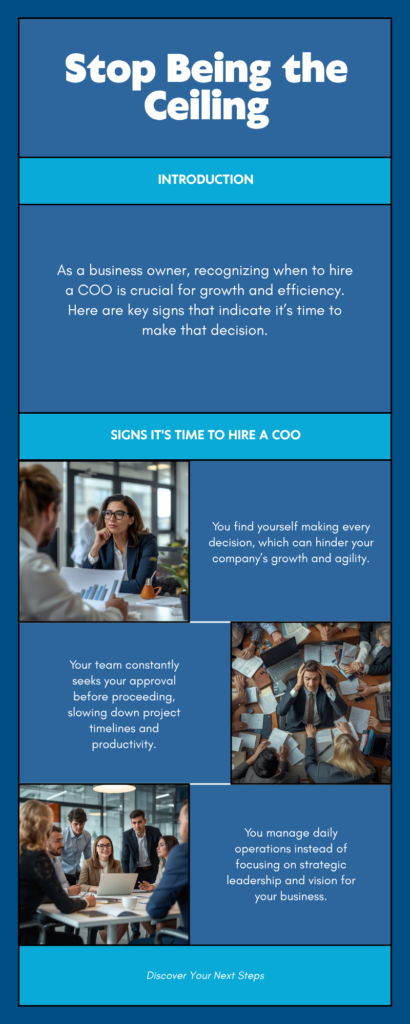
The CEO’s Real Job Once Your Company Passes $10M

Why designing and developing matters more than doing

There’s a moment in every CEO’s journey when the business gets too big to run the way it used to.
Usually, it’s somewhere around the $10M mark.

You’ve built the company through grit, instinct, and getting involved in everything. But now, things are moving faster. The leadership team is growing. Accountability is getting blurry. And your time is getting pulled in too many directions.

This is when the CEO’s job starts to shift and most don’t see it coming.

The problem isn’t you. It’s that your role hasn’t evolved as fast as the business has.

What Got You Here Won’t Get You There

Most CEOs at this stage are still doing too much themselves. They’re solving day-to-day problems, jumping into meetings that don’t require them, and carrying key relationships that no one else has full context on.

It’s not because they’re controlling. It’s because that’s what built the business in the first place.

But when you cross $10M, hustle turns into friction. The leadership team needs space to lead. Decisions take longer when everything passes through one person. And you start to feel stuck, working harder than ever, with less impact than before.

That’s the signal. The job has changed.

The Real Work Starts to Shift

The shift looks like this:

  1. From Doing to Designing
    You stop being the problem-solver and start being the system designer.
    Your value comes from building the structure that allows others to lead. That means defining roles, decision rights, and communication rhythms,  not just stepping in when things go sideways.
  2. From Designing to Developing Leaders
    Once structure is in place, you start building real leadership depth. That means coaching, accountability, and succession planning. You don’t just delegate tasks,  you develop people who can think, decide, and act without you in the room.
  3. From Rescuing to Releasing
    This might be the hardest part. As the CEO, you’re used to having the answers. But now, your job is to let others own the results, even if they get it wrong before they get it right.

What This Looks Like in Practice

We’ve seen this shift play out in dozens of companies, and the patterns are consistent:

  • The CEO is still the bottleneck for decisions that should live in the team
  • Meetings are crowded with updates instead of forward-looking decisions
  • The org chart looks clean on paper, but in practice, people still escalate everything up
  • Strategy gets stuck because the leadership team doesn’t fully own execution
  • Performance issues go unaddressed because accountability isn’t clear

This isn’t bad leadership. It’s a normal growth ceiling. The way through it isn’t to do more,  it’s to lead differently.

Use Frameworks to Support the Shift

This is where frameworks like EOS, Scaling Up, or Lencioni’s team models come in. They give CEOs and leadership teams language, structure, and systems to support scale.

  • EOS helps clarify roles and meeting rhythms early in the journey
  • Scaling Up goes deeper into team accountability, strategy, and cash
  • Lencioni’s Five Dysfunctions can help surface team dynamics that slow progress

These tools don’t replace leadership, but they do help create the foundation for a CEO to step into a higher-leverage role.

If some of these patterns sound familiar,  like slow decisions, shallow accountability, or friction on the leadership team,  here’s a deeper look at why many companies between $10M and $50M stall, and what to do about it:

Why Most $10–50M Companies Stall at the Same Growth Ceiling

What the CEO’s Role Looks Like Now

Past $10M, the CEO’s real job sounds more like this:

  • Design the structure, not manage the work
  • Develop leaders who take full ownership
  • Protect alignment between vision, team, and execution
  • Drive clarity across the leadership table
  • Model calm, focused leadership in the face of growth pressure

This is the shift from founder energy to CEO focus. And it’s the difference between companies that keep growing and those that stall under their own complexity.

Final Thought

If you’re spending your days in back-to-back meetings, solving problems that others should own, and wondering why it all feels heavier than it should,  it might be time to reframe your role.

This is a pattern we see in nearly every company that crosses the $10M mark.

And like most ceilings, it’s more solvable than it feels.

A short conversation often brings clarity.
Reach out to Newlogiq if you’d like to talk through where you are, where you’re stuck, and what the next chapter of your role might look like.

Need to Improve Lead Generation? Seamless.ai May be Your Answer

Need to Improve Lead Generation? Seamless.ai May be Your Answer

In today’s fast-paced business environment, effective lead generation is the cornerstone of growth and success, especially for small to medium-sized businesses (SMBs). At Newlogiq,we understand the unique challenges SMBs face in acquiring high-quality leads efficiently and cost-effectively. That’s why we’re excited to introduce you to Seamless.ai, a cutting-edge lead generation platform designed to transform your business development efforts.


What is Seamless.ai?

Seamless.ai is a powerful lead generation tool that leverages artificial intelligence to help businesses find and connect with their ideal prospects. By automating the process of discovering and verifying contact information, Seamless.ai ensures that your sales and marketing teams can focus on what they do best: building relationships and closing deals.

Key Features of Seamless.ai


      1. AI-Driven Search: Seamless.ai uses advanced AI algorithms to scour the internet and compile accurate and up-to-date contact information for your target audience. This includes email addresses, phone numbers, and social media profiles.

      1. Real-Time Data Enrichment: The platform continuously updates its database, ensuring that the information you access is always current and reliable. This minimizes the risk of reaching out to outdated or incorrect contacts.

      1. Intent Data: The platform contains a powerful feature called intent matching that allows targeted searches based upon Google or Bing searches performed within an organization. This features allows users to narrow in on organizations actively searching for products or services related to your offering.

      1. Integrated CRM Tools: Seamless.ai seamlessly integrates with popular CRM platforms such as Salesforce, Hubspot and Pipedrive allowing you to import and manage leads effortlessly. This integration streamlines your workflow and enhances team collaboration.

      1. Advanced Filtering Options: With Seamless.ai, you can tailor your searches using various filters such as industry, company size, location, and more. This ensures that you are targeting the most relevant prospects for your business.

      1. Automated Outreach: The platform offers automated email sequences and follow-ups, helping you stay engaged with prospects without the need for manual intervention.

    Benefits for SMBs

    1. Increased Efficiency: By automating the lead generation process, Seamless.ai frees up valuable time for your sales and marketing teams, allowing them to focus on high-value activities that drive growth.

    2. Cost-Effective: Traditional lead generation methods can be expensive and time-consuming. Seamless.ai offers a cost-effective alternative, providing high-quality leads at a fraction of the cost.

    3. Enhanced Accuracy: The platform’s real-time data enrichment ensures that your contact information is always accurate, reducing the chances of wasted efforts on outdated leads.

    4. Scalable Solution: Whether you’re a startup or an established business, Seamless.ai can scale with your needs, providing a flexible solution that grows with your business.

    5. Improved Conversion Rates: With access to accurate and relevant leads, your sales team can engage in more meaningful conversations, ultimately improving conversion rates and driving revenue growth.

    Key Success Factors for Implementing Seamless.ai

    To maximize the benefits of Seamless.ai, SMBs should consider the following success factors:


        1. Define Clear Objectives: Establish clear goals for your lead generation efforts. Whether it’s increasing the number of qualified leads or improving conversion rates, having defined objectives will guide your strategy and measure success.

        1. Train Your Team: Ensure that your sales and marketing teams are well-trained on how to use Seamless.ai effectively. Familiarity with the platform’s features and capabilities will enhance productivity and results.

        1. Integrate with Existing Tools: Seamless.ai’s integration capabilities are a significant advantage. Make sure to integrate the platform with your existing CRM and marketing automation tools to streamline workflows and improve data consistency.

        1. Regularly Review and Optimize: Continuously monitor the performance of your lead generation efforts. Use the insights provided by Seamless.ai to refine your approach and optimize your strategy for better results.

        1. Stay Engaged with Prospects: Utilize Seamless.ai’s automated outreach features to maintain consistent communication with your prospects. Personalized follow-ups and timely engagements can significantly improve your chances of closing deals.

      Conclusion

      Seamless.ai is a game-changer for SMBs looking to enhance their lead generation efforts. By leveraging AI-driven technology, the platform provides a cost-effective, efficient, and scalable solution that delivers high-quality leads. At Newlogiq, we believe that embracing innovative tools like Seamless.ai can propel your business to new heights. Start your journey towards more effective lead generation today and experience the transformative power of Seamless.ai.


      Connect with us at Newlogiq to learn more about how Seamless.ai can revolutionize your lead generation strategy and drive your business growth.


      About Newlogiq

      Newlogiq is a leading provider of innovative business solutions designed to empower SMBs with the tools they need to succeed in today’s competitive market. Our mission is to help businesses grow by providing cutting-edge technology and unparalleled support.


      #LeadGeneration #SMB #AI #SeamlessAI #BusinessGrowth #Sales #Marketing #Newlogiq

      A Whitepaper: Developing a Pragmatic AI Strategy for SMBs

      A Whitepaper: Developing a Pragmatic AI Strategy for SMBs

      In today’s fast-paced technology driven world, Artificial Intelligence (AI) is no longer the exclusive domain of large corporations with hefty budgets. Small-to-mid-sized businesses (SMBs) can also harness the power of AI to streamline operations, enhance customer experiences, and drive growth. However, the key to success lies in developing a pragmatic AI strategy tailored to the unique needs and constraints of SMBs. This whitepaper, authored by Newlogiq, explores the considerations necessary to effectively implement AI within SMBs.

      Understanding the Basics of AI

      Before delving into strategy, it’s essential to understand what AI entails. At its core, AI refers to the simulation of human intelligence in machines programmed to think, learn, act and emote like humans. There are several types of AI:

      • Narrow AI: This is designed to perform a narrow task (e.g., facial recognition or internet searches).
      • General AI: This type would possess the capability to perform any intellectual task that a human can do.
      • Superintelligent AI: This surpasses human intelligence in every aspect, from creativity to problem-solving.

      For SMBs, Narrow AI is the most relevant, as it can be integrated into various business processes to offer immediate and tangible benefits. Narrow AI applications, such as chatbots and predictive analytics, can address specific business challenges without requiring extensive resources.

      Understanding these types of AI is crucial for SMBs because it sets realistic expectations and helps in selecting the most suitable AI technologies. While General AI and Superintelligent AI remain largely theoretical and beyond the reach of SMBs, Narrow AI provides practical solutions that can be implemented today.

      By focusing on Narrow AI, SMBs can avoid the pitfalls of over-ambition and instead concentrate on achievable goals that deliver measurable results. This focus allows for a more targeted approach, ensuring that resources are used efficiently and effectively.

      To Read the Entire Whitepaper, Please Complete this Form…

      Solving the Parts & Logistics Puzzle: How Newlogiq Helps Service Leaders Overcome Common Frustrations

      Many Service Business Leaders are Frustrated with Their Spare Parts and Logistics Processes

      design-sprints-about

      Jeff Oskin Headshot

      Jeff Oskin

      Owner

      For most field service organizations, including HVAC, medical device, utilities and general service providers, parts and logistics are a critical, yet immensely frustrating aspect of the operation. Ensuring the right parts are available at the right time is crucial for delivering exceptional customer service and maintaining operational efficiency. However, many service leaders find themselves frustrated with their current parts and logistics processes, which often hinder rather than support their goals. There are many frustrations, including:

      1. Visibility into Availability – Without real-time data on stock levels and locations, service leaders struggle to make informed decisions about parts allocation and distribution. This lack of transparency can lead to stockouts, delays in service delivery, and ultimately, dissatisfied customers.
      2. Multiple Suppliers & Distributors – Service leaders often deal with a fragmented network of parts providers, each with their own ordering systems, lead times, and pricing structures. This complexity makes it difficult to streamline processes, negotiate favorable terms, and ensure consistent quality across the supply chain.
      3. Administrative Burden – Manual and outdated processes for ordering, tracking, and invoicing parts can be a major source of inefficiency and errors. Service leaders may find themselves spending excessive time on administrative tasks, such as reconciling invoices or chasing down missing shipments, rather than focusing on strategic initiatives to improve service delivery.
      4. Lack of Integration – The lack of integration between parts and logistics systems and other key service management tools, such as customer relationship management (CRM) or enterprise resource planning (ERP) software, can also contribute to frustration. Without seamless data flow and communication between these systems, service leaders may struggle to get a holistic view of their operations and make data-driven decisions.
      5. Cost Pressures – The pressure to reduce costs while maintaining high service levels can be a constant challenge. Service leaders must balance the need for efficient parts management with the demand for quick response times and first-time fix rates. 

      How Do We Help?

      With more than 25 years experience running and supporting service organizations, our consulting experts understand the critical role that parts and logistics play in the success of your field service operations. Our team of experienced consultants specializes in helping service leaders like you overcome the frustrations and challenges associated with managing parts and logistics processes. We work closely with you to identify bottlenecks, inefficiencies, and opportunities for improvement, and develop customized solutions that align with your unique business needs and goals. Our services include:

      1. Choose & Implement Service Logistics Software – Service is different and service logistics is very different than many ERP based logistics solutions that focus on manufacturing.  We understand the nuances of reverse logistics, staging inventory, truck stock and advanced replacement and as such leverage our knowledge and expertise to help find the best solution for your unique business challenges.  Following selection, we help you implement inventory management systems that provide real-time visibility into stock levels and parts availability, enabling you to make informed decisions and minimize stockouts
      2. Integrate with Core Platforms – Our experts assist in integrating your parts and logistics systems with other key service management tools, such as CRM and ERP software, to ensure seamless data flow and communication.  This improved visibility helps all aspects of your operation, not just your warehouse team.
      3. Process Redesign – We leverage our knowledge of best-in-class approaches to re-examine current processes and collaboratively work to reduce administrative burdens.  As a result, we empower your team to focus on delivering exceptional service to your customers.  With our guidance and support, you can transform your parts and logistics processes into a strategic asset that drives efficiency, cost savings, and customer satisfaction.

      Back to Homepage


      Latest Articles

      Continue reading

      Press Release: Discover the Benefits of Joining a Peer Advisory Board in the Capital District Area

      Join Jeff Oskin for a free information session on Wednesday, Dec 13th at the Hyatt Place Malta to learn more about the benefits of joining a peer advisory board.

      design-sprints-about

      Jeff Oskin Headshot

      Jeff Oskin

      Owner

      SARATOGA SPRINGS, NY, UNITED STATES, December 4, 2023 /EINPresswire.com/ — Join Jeff Oskin for a free information session on Wednesday, December 13th at the Hyatt Place Malta to learn more about the benefits of joining a peer advisory board in the Capital District area.

      For the last 10+ years, Jeff Oskin has been leading and facilitating peer advisory boards and providing executive coaching for some of the most successful business leaders in the Capital District area. The list of individuals Mr. Oskin has been fortunate to closely work with include Best Places to Work winners, Albany Business Review Company of the Year winners, and 40 Under 40 Winners.

      Now, Mr. Oskin is expanding the concept in 2024 to include several new boards that include next generation leaders, next generation family business leaders, non-profit leaders, finance & operations leaders, and sales & marketing leaders. An invitation to join these boards is a tremendous opportunity to further enhance leadership skills, as well as improve overall business results of participants.

      “I’m excited to be able to offer this opportunity to the Capital District area,” said Oskin. “The peer advisory board concept has been incredibly successful for the last 10+ years and I’m looking forward to seeing the same success with the new boards.”

      The free information session will be held on Wednesday, December 13 at the Hyatt Place Malta from 7:30am-9:00am and breakfast will be provided. The session will include an overview of the peer advisory board concept, the benefits of joining a board, a review of the different boards that will be available and the invitation process to be selected for participation. Attendees will have the chance to hear from existing members of Mr. Oskin’s other peer advisory boards, ask questions about the concept, participate in a live demonstration of a peer advisory board and network with other professionals.

      “This is a great opportunity for business leaders to come together and learn from each other,” said Oskin. “I’m looking forward to meeting everyone and helping them take their business to the next level.”

      Don’t miss out on this opportunity to learn more about the benefits of joining a peer advisory board in the Capital District area. Register for the free information session on Wednesday, December 13th at the Hyatt Place Malta from 7:30am-9:00am by clicking this link.

      Jeff Oskin
      Newlogiq
      +1 518-428-9229
      jeff.oskin@newlogiq.com
      Visit us on social media:

      Back to Homepage


      Latest Articles

      Continue reading

      Don’t Make These 5 Key Artificial Intelligence Adoption Mistakes

      Artificial intelligence (AI) is one of the most significant technological innovations of the 21st century.

      design-sprints-about

      Jeff Oskin Headshot

      Jeff Oskin

      Owner

      Artificial intelligence (AI) is one of the most significant technological innovations of the 21st century. It has the potential to revolutionize the way businesses operate, from improving productivity and efficiency to creating new products and services. However, AI adoption is not as straightforward as it may seem. Many businesses face challenges in implementing AI technology. As a CEO or business owner, you need to be aware of the obstacles that come with AI adoption so that you can address them effectively. In this blog post, we’ll discuss some of the key challenges of AI adoption and how to overcome them.

      Lack of Skilled Personnel

      One of the biggest challenges of AI adoption is the lack of skilled personnel to develop and implement AI technology. Many businesses lack in-house expertise in AI, and hiring specialized professionals can be expensive and time-consuming. According to a report by Indeed Hiring Lab, job postings for AI and machine learning (ML) positions have increased by over 30% in the last year, but the supply of qualified candidates still falls short of the demand.

      To overcome this challenge, businesses can set up training programs for existing employees to upskill them in AI and ML. They can also partner with universities or training institutions to create pipelines of qualified candidates. Finally, business leaders can outsource initial forays into AI to third-party experts, such as Newlogiq, who can help get the AI ball rolling while simultaneously developing internal skills.

      Data Quality and Availability

      AI technology relies heavily on data, and the quality and availability of data can significantly impact its effectiveness. If the data is incomplete, outdated, or inaccurate, it can lead to biased or incorrect results. Many businesses struggle with collecting and preparing high-quality data for AI applications.

      To address this challenge, businesses need to invest in high-quality data management systems that can ensure the accuracy and completeness of data. Infrastructure such as data lakes, data warehouses, etc. are critical for more advanced AI deployments, especially if you want the algorithms to take into account your data (vs. be a tool to assist your existing staff). It’s also essential to consider the ethical implications of using data in AI applications and ensure that it aligns with your company values and policies.

      Cost of Implementation

      Implementing AI technology can be expensive, especially for smaller businesses. The cost of hardware, software, and personnel can quickly add up, making it challenging for businesses to adopt AI technology.

      To overcome this challenge, businesses can start by piloting small AI projects before embarking on large-scale implementations. They can also consider outsourcing AI development and implementation to reduce costs. Newlogiq has designed several services for this exact scenario.

      Change Management

      Resistance to change is a common challenge that many businesses face when implementing new technologies. It can be challenging to get employees to adopt new tools and systems, especially if they have been using traditional methods for a long time. Further, much of the hype surrounding AI is focused on “worker replacement”, which will naturally instill fear in your teams.

      To address this challenge, businesses need to create a culture of innovation and encourage employees to embrace change. It’s essential to involve employees in the process of implementing AI technology, so they feel invested in its success. Using AI to make your existing staff more effective needs to be the mantra for AI deployments.

      Ethics and Regulation

      The ethical implications of AI technology are becoming increasingly important for businesses to consider. There are concerns about the potential misuse of AI, including biased decision-making, privacy violations, and job displacement. In addition, there are regulations in place for certain industries that require compliance with ethical guidelines.

      To address this challenge, businesses need to establish ethical guidelines and policies for AI technology. They should also monitor the regulatory environment and ensure compliance with relevant laws and regulations.

      Conclusion

      AI technology has the potential to transform businesses, but its adoption comes with significant challenges. Businesses need to be aware of these challenges and take steps to address them. By investing in skilled personnel, high-quality data management systems, and ethical guidelines, businesses can overcome these obstacles and realize the benefits of AI technology. As a CEO or business owner, taking a proactive approach to AI adoption can give your business a competitive edge and position it for success in the digital age. To learn more about how Newlogiq is helping businesses just like yours avoid these key AI adoption challenges, contact Newlogiq today.

      Back to Homepage


      Latest Articles

      Continue reading

      How to Choose the Right AI Applications for Your Business

      Artificial intelligence, or AI, is revolutionizing modern business operations. It has become a critical tool for improving productivity, creating efficiencies, and increasing profits.

      design-sprints-about

      Jeff Oskin Headshot

      Jeff Oskin

      Owner

      Artificial intelligence, or AI, is revolutionizing modern business operations. It has become a critical tool for improving productivity, creating efficiencies, and increasing profits. Advances in AI technology have made it easier than ever for businesses of all sizes and industries to leverage its capabilities. However, with so many AI applications available on the market today, choosing the right ones for your business can be a daunting task. As AI business consulting experts, we will walk you through the key factors to consider when selecting AI applications for your business. These are the same guidelines Newlogiq uses when helping our clients evaluate and implement AI solutions.

      Identify Your Business Needs

      Before embarking on the journey to finding the right AI application for your business, you need to assess your business needs. Ask yourself, what are the specific problems I want to solve in my business with AI technology? Identifying your business needs will help you narrow down your options and choose an AI application that addresses those specific pain points. For instance, if you’re running an e-commerce business, then product recommendation engines or chatbots may be the right AI solutions for you.

      Consider Industry-Specific Applications

      AI is not a one-size-fits-all solution; some applications are tailored for specific industries. When researching AI applications, it is crucial to evaluate industry-specific solutions that are built to address the unique challenges of your sector. For example, healthcare providers may find AI-powered diagnostics and treatment path recommendations systems useful. Similarly, manufacturing companies may benefit from AI applications that promote predictive maintenance and quality control. Look for vendors who provide a free trial period or demos so you can test the product’s effectiveness. Implementing an AI application without testing it first can have serious repercussions and add to your already high costs.

      Consider Customization Capabilities

      Every business is unique, which means its AI application requirements may also be unique. When selecting AI solutions, consider how much they can be customized to meet your business needs. AI applications that have modular designs or open APIs can be easily customized to suit your needs and are more flexible for the future. These AI solutions that can adapt and grow with your business can save you significant costs and headaches over the long term.

      Assess the Quality of the Vendor

      Choosing the right AI vendor is as important as choosing the right AI application. Take time to research vendors and consider aspects such as their customer service, technical expertise, and level of experience in your industry. Focus on vendors with established reputations, track records of success, and on-time delivery. You need to understand how long they have been in business and what experience they have in developing and deploying AI solutions. You should also check if they have a proven track record of delivering successful outcomes to businesses similar to yours.

      Ensure Security and Data Privacy

      As the use of AI grows in organizations, data security and privacy have become a critical concern. When selecting AI applications, ensure that the vendor’s data handling policies meet your organization’s security and privacy requirements. The application must be able to handle sensitive data securely, and the vendor must have a plan for dealing with data breaches.

      Design for Scalability

      As your business grows, its AI needs will evolve, and your AI applications must scale with your business. Thus, it is essential to select AI applications that are designed with scalability in mind. This means that the applications can process an increasing volume of data and users without compromising performance or accuracy. Therefore, when researching AI applications, it is essential to inquire how scalable the solutions are and how the vendor plans to manage increased demand.

      Assess Integration Capabilities

      Another critical factor to consider when selecting AI applications is integration capabilities. The AI application you choose should seamlessly integrate with your existing software and platforms. This will prevent unnecessary disruptions to your business operations and help you realize the benefits of AI applications more quickly. Consequently, it is crucial to inquire about integration capabilities before selecting an AI application.

      Conclusion

      In conclusion, selecting the right AI applications for your business can be a massive undertaking with many factors to consider. Choosing the right AI applications for your business is a critical decision as it has the potential to transform your operations, increase productivity, and boost revenue growth. However, by focusing on identifying your business needs, evaluating vendor expertise, evaluating industry-specific AI applications, assessing customization capabilities, ensuring data security and privacy, and overall integration capabilities you’ll be one step ahead in the selection process. Keep an open mind and be willing to experiment with different AI applications before finding the perfect fit. Lastly, remember that choosing the right AI application is a journey and not a destination, so be prepared to continually assess your AI applications as your business evolves. By doing so, you’re sure to leverage the full potential of AI and drive business success.

      Choosing and implementing the right AI tools that yield high ROI is a specialization of Newlogiq. We encourage you to reach out and setup an introductory session to discuss how we can help you get on the “AI bandwagon” while ensuring a strong business return.

      Back to Homepage


      Latest Articles

      Continue reading